Key Takeaways
- Presbyopia is linked to age-related changes in the eye’s natural lens, which can make close-up vision harder.
- Glasses correct the effect of presbyopia, while lens-based presbyopia treatment considers changing the lens inside the eye.
- Lens replacement is not simply about avoiding reading glasses; different lens options involve different visual considerations and trade-offs.
- Whether it is appropriate depends on individual eye health, visual needs and expectations.
What If Your Reading Glasses Are Treating The Symptom, Not The Source?
Have you noticed yourself holding your phone further away to read it?
Perhaps the words are clear once you put on your reading glasses, but you find yourself reaching for them repeatedly throughout the day. That is because presbyopia is not caused by your glasses being inadequate. It happens as the eye’s natural lens changes with age and becomes less able to adjust its focus for nearby objects.
Glasses compensate for this change. But there is another question worth asking- could the natural lens itself be part of the treatment conversation? This is where lens-based presbyopia treatment comes into consideration.
How can changing the lens inside the eye affect presbyopia?
The natural lens sits behind the iris and helps focus light onto the retina. As presbyopia develops,
- The lens gradually becomes less flexible.
- The eye has more difficulty changing focus from distant to nearby objects.
- Reading, sewing and other close-up activities may become more challenging.
- Reading glasses, bifocals or other optical corrections can compensate for this loss of near focus.
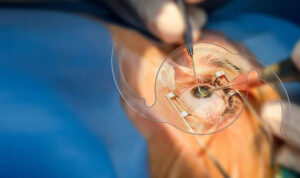
A lens-based approach takes a different route. In lens replacement, the natural lens is removed and replaced with an artificial intraocular lens (IOL).
The important point is that the aim is not simply to remove the need for glasses. The choice of IOL also involves considering how you want to see at different distances and what visual compromises may be acceptable to you.
Is Lens Replacement Automatically Better Than Reading Glasses?
Not at all. This is one of the less discussed parts of the decision.
Reading glasses are straightforward, familiar and may be entirely suitable for someone who does not mind using them. Lens-based treatment involves an intraocular procedure, so the potential benefits need to be considered alongside its limitations.
For example, depending on the IOL and individual circumstances, some people may still require glasses for certain activities. Some lens designs can also be associated with visual phenomena such as glare or halos.
What Would A Doctor Consider Before Recommending A Lens-based Option?
There is no single lens choice that suits everyone. An assessment may consider,
- Your distance, intermediate and near vision requirements.
- The health of your cornea, retina and other parts of the eye.
- Existing eye conditions that could influence the decision.
- Your work, hobbies and everyday visual demands.
- Whether you are comfortable with the possibility of using glasses for some tasks.
- Your understanding of the potential benefits and limitations of different IOL options.
This makes the consultation more than a discussion about presbyopia. It becomes a discussion about how you use your vision.
Could Lens-based Presbyopia Treatment Be Worth Discussing?
For some people, continuing with reading glasses may remain the most practical choice. For others, particularly those considering a longer-term lens-based approach to their changing vision, it may be reasonable to explore the available options.
The important thing is not to approach lens replacement as a guaranteed route to glasses-free vision. It is an individual medical decision that should follow an assessment of the eyes and a realistic discussion about possible outcomes.
What Should You Ask Before Considering Lens Replacement?
Before making a decision, you may want to ask,
- Why might a lens-based approach be suitable for my eyes?
- What type of IOL is being considered, and why?
- What vision can I realistically expect at different distances?
- Could I still need glasses?
- What visual effects or limitations should I understand?
- Are there reasons why continuing with glasses might be more appropriate?
These questions can help you make a decision based on your actual visual priorities rather than simply the promise of using fewer glasses.
Frequently Asked Questions
Is Lens-Based Presbyopia Treatment The Same as LASIK?
No. LASIK changes the shape of the cornea. Lens-based treatment involves the natural lens inside the eye and may involve replacing it with an artificial intraocular lens.
Does Lens Replacement Mean I Will Never Need Glasses Again?
Not necessarily. The need for glasses depends on several factors, including the IOL selected, your eyes and the activities you perform. Some people may still use glasses for particular tasks.
Can Everyone With Presbyopia Have Lens Replacement?
No. Suitability needs to be assessed individually. The health of the eye and your visual requirements both matter.
What Happens During An Assessment?
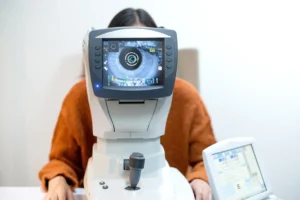
Your eye health and vision are assessed, followed by a discussion about your visual needs, available options and the potential benefits and limitations of those options.
Is Lens Replacement The Right Choice If I Am Comfortable Wearing Reading Glasses?
Not necessarily. If reading glasses work well for you, continuing with them may remain a reasonable option. A consultation can help you understand whether there is a meaningful reason to consider a lens-based approach.
Could Changing The Lens Inside Your Eye Be The Next Conversation About Presbyopia?
Presbyopia does not have to mean automatically choosing between stronger reading glasses and doing nothing. There are different ways of approaching age-related changes in near vision, and the appropriate option depends on the individual.
If you are in Singapore and considering lens-based presbyopia treatment, a consultation at London Eye & Retina Specialist Centre can help you understand whether this approach is appropriate for your eyes and visual needs. Dr. James Ng Kin Wah can discuss the available options, potential limitations and what may be realistic for your particular situation.
Consider booking a consultation to discuss your vision needs and understand your options before making a decision.