Restoring Clarity and Confidence in Your Vision
Cataracts are a common age-related eye condition. Cataracts gradually cloud the eye’s natural lens, leading to blurred vision and visual disturbances that can affect everyday activities. It often starts subtly. The colours look duller, night driving becomes a chore, or reading small print gets harder despite new glasses. If this sounds like something you face regularly, you likely have cataracts. Cataract surgery is also called a cataract operation: the cloudy natural lens is removed and replaced with a clear artificial lens.
At London Eye & Retina, we understand how changes in vision can impact your quality of life. Cataract surgery is a widely performed procedure in Singapore, and our team is here to walk you through your options with care and clarity. If you’ve been struggling with cloudy or dim vision, it might be time to take the next step, and we’re here to help you see it through.
What Are Cataracts?
A cataract occurs when the clear lens of the eye becomes cloudy, usually due to ageing. This clouding prevents light from passing clearly through to the retina, making vision appear foggy or blurred. Cataracts can develop in one or both eyes and tend to progress slowly.
While age is the most common cause, other factors include:
- Diabetes
- Long-term steroid use
- Previous eye injury
- Family history of cataracts
- Prolonged exposure to UV rays or smoking
What Are the Symptoms?
The early stages of cataracts may not affect your vision significantly. However, as they progress, you may experience:
- Blurred or hazy vision
- Sensitivity to light and glare
- Difficulty seeing at night
- Faded colours
- Frequent changes in prescription glasses
These symptoms can interfere with daily tasks, and if left untreated, cataracts may lead to severe vision loss.
When Should You Consider Cataract Surgery?
Cataract surgery is recommended when the clouding of your natural lens begins to disrupt your everyday life. Whether it’s difficulty reading, driving at night, or recognising faces, surgery can restore the sharpness and clarity of your vision.
The procedure involves replacing the cloudy lens with a clear, artificial intraocular lens (IOL). Depending on your lifestyle and visual needs, you may have choices in IOLs, such as monofocal, multifocal, or toric lenses.
How Is Cataract Surgery Performed?
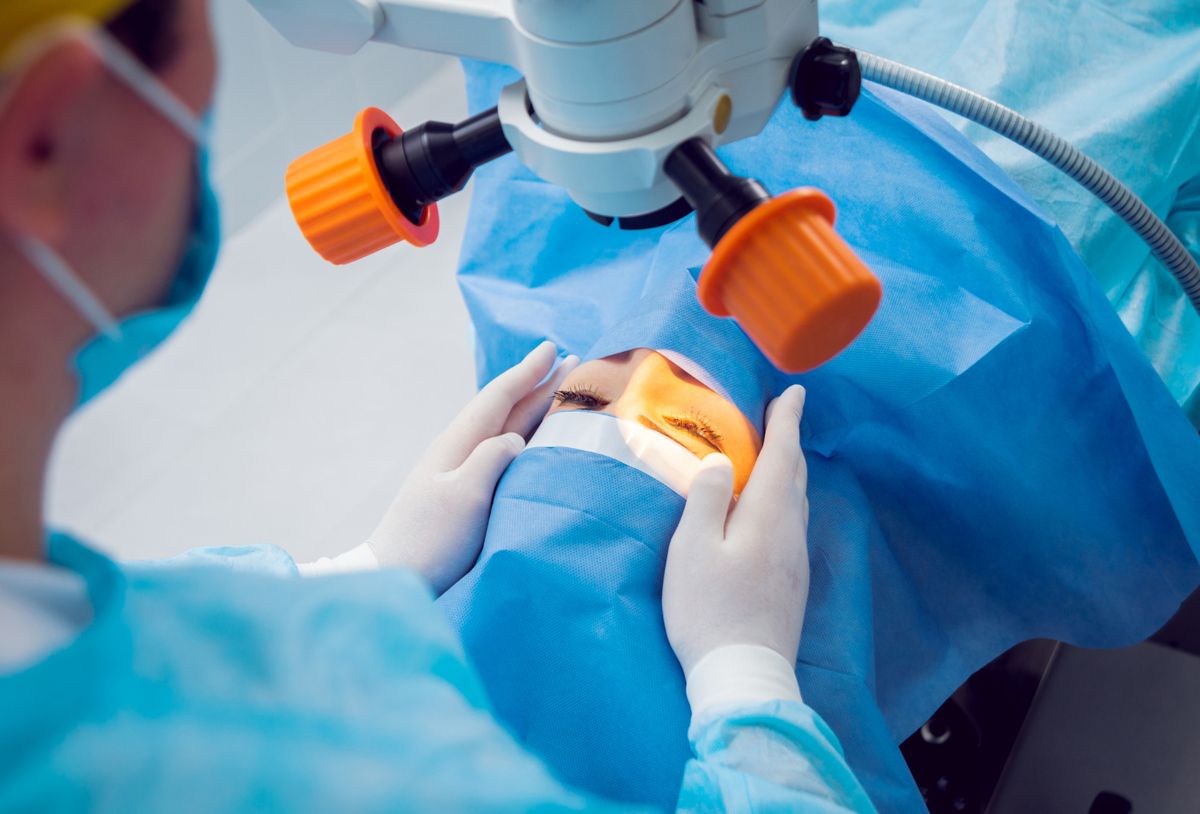
At London Eye & Retina, cataract surgery is a day procedure performed under local anaesthesia. Using a precise technique called phacoemulsification, the surgeon gently removes the clouded lens and replaces it with an IOL. The entire surgery typically takes less than 30 minutes.
Our team uses technology to ensure a smooth and safe experience, with a focus on helping you achieve exceptional visual outcomes.
Recovery and Results
Most patients notice clearer vision within a few days, with full recovery expected in a few weeks. During this period, we provide tailored aftercare guidance and follow-up visits to ensure optimal healing and comfort.
Your Vision, Your Choice
Cataract surgery is not just about removing the cloudy lens; it’s a decision to regain visual independence and enhance your day-to-day life. Our team will work with you to select the IOL that suits your goals and to ensure you are fully informed every step of the way.
How Much Does Cataract Surgery Cost in Singapore?
Cataract surgery is priced individually, because the lens type, technique and facility are chosen with you. You receive a written estimate after your assessment, before you commit.
| Fee | |
|---|---|
| Cataract basic screening | $57.77 |
| Comprehensive cataract screening | $199.47 |
| Cataract surgery (per eye) | Quoted after assessment |
- MediSave: cataract surgery is claimable up to the CPF surgical withdrawal limit.
- Integrated Shield Plans: most private plans cover cataract day surgery, and our team helps with Letters of Guarantee and pre-authorisation.
Fees include 9% GST. See all fees & packages.
Is Cataract Surgery Painful?
Cataract surgery is performed under local anaesthesia, and most patients feel only mild pressure rather than pain. Surgery on one eye typically takes under 30 minutes, and you go home the same day.
Which Lens Is Best for Cataract Surgery?
Your cloudy natural lens is replaced with a clear intraocular lens (IOL). The right lens depends on your eyes, lifestyle and budget:
- Monofocal: sharp vision at one distance (usually far); reading glasses are typically still needed for close work.
- Toric: corrects significant astigmatism at the same time.
- Extended depth of focus (EDOF): a continuous range from distance to intermediate, with fewer night-time glare and halo effects than multifocal lenses.
- Multifocal: clear near, intermediate and distance vision for the greatest freedom from glasses, in suitable eyes.
Laser-Assisted or Standard (Phaco) Cataract Surgery?
Phacoemulsification is the standard technique: ultrasound gently breaks up and removes the cloudy lens through a tiny incision. In laser-assisted (bladeless) surgery, a femtosecond laser performs some of the key steps. Dr Ng will discuss whether laser assistance suits your eye.
Measuring Your Eye Before Surgery
Your measurements are taken on the Haag-Streit EyeStar 900, a swept-source OCT biometer for cataract and refractive surgery, and your retina is imaged with TowardPi OCT. As a retina sub-specialist, Dr Ng also checks for hidden retinal problems that could affect your result.
Cataract Screening: What’s Included
Cataract Basic Screening Package
$57.77 incl. 9% GST
Tests included
- Visual acuity
- Auto-refraction
- Auto-keratometry
- Eye pressure check
- Central corneal thickness
- Colour vision testing
- Amsler grid testing
- Relative afferent pupillary defect (RAPD) testing
- Optical Coherence Tomography of the Macula
- Van Herrick angle measurement
- Assessment of Ocular Dominance
- Baseline Eye Dryness Test
- Fundus photograph
- Doctor’s report without consultation
Comprehensive Screening Package: Cataract
$199.47 incl. 9% GST
Tests included
- Visual acuity
- Auto-refraction
- Auto-keratometry
- Eye pressure check
- Colour vision testing
- Amsler grid testing
- Central corneal thickness
- Relative afferent pupillary defect (RAPD) testing
- Optical Coherence Tomography of the Disc and Macula
- Corneal topography
- Van Herrick angle measurement
- Assessment of Ocular Dominance
- Baseline Eye Dryness Test
- Fundus photograph
- Doctor’s consultation
Fees are a guide and may vary with clinical needs. See all fees & packages.
More questions patients ask
Will I still need glasses after cataract surgery? Whether you need glasses after cataract surgery depends mainly on the lens chosen. With a monofocal lens, vision is sharp at one distance, usually far, so reading glasses are typically still needed. Extended depth-of-focus lenses give a range from distance to intermediate, and multifocal lenses offer the greatest freedom from glasses in suitable eyes, although some people notice halos at night.
What symptoms after cataract surgery need urgent attention? Increasing pain, a sudden drop in vision or increasing redness after cataract surgery needs prompt review. Retinal detachment after cataract surgery is uncommon but can occur months or years later, so a sudden increase in floaters, flashes of light, or a shadow or curtain across your vision also needs urgent care. Call +65 6908 7533; 24-hour emergency eye care is available.
How many cataract operations has Dr James Ng performed? Dr James Ng has performed at least 5,000 cataract surgeries and 3,000 vitrectomies over more than 20 years of eye surgery. He is triple fellowship-trained, with fellowships covering complex cataract surgery and vitreoretinal surgery, including a Senior Fellowship in Vitreoretinal Surgery at Moorfields Eye Hospital, and he performs cataract surgery personally at the clinic in Novena.
Are both eyes done on the same day for cataract surgery? Yes. Both eyes are done on the same day.
Can a cataract come back after surgery? Yes. A secondary cataract (clouding of the membrane behind the lens implant, called posterior capsule opacification) can form after surgery. It can be easily removed using a YAG laser.
Ready to Take the First Step?
If you’ve noticed changes in your vision or been told you have cataracts, don’t wait until it worsens.
Schedule a consultation with Dr. James Ng at London Eye & Retina and explore your options for clearer, sharper sight.