Understanding and Managing a Genetic Condition That Affects Night and Peripheral Vision
Retinitis pigmentosa (RP) refers to a group of inherited retinal disorders that gradually affect the light-sensitive cells of the retina. Early symptoms often include difficulty seeing in dim lighting or at night, followed by a gradual reduction in peripheral vision. As the condition progresses, some people may also experience changes in central vision.
Because retinitis pigmentosa can develop differently from one person to another, regular retinal assessments are important for monitoring changes in vision and retinal function. While there is currently no cure for most forms of RP, appropriate management, visual support, and retinal macula treatment, where applicable, can help address associated retinal complications and preserve remaining vision.
What Is Retinitis Pigmentosa?
What Causes Retinitis Pigmentosa?
- Autosomal dominant
- Autosomal recessive
- X-linked (often more severe in males)
Common Symptoms For Retinitis Pigmentosa
- Night blindness (first noticeable in dim lighting or dark environments)
- Tunnel vision (loss of peripheral vision)
- Difficulty adjusting between light and dark settings
- Progressive narrowing of the visual field
- In later stages, central vision loss
How Is Retinitis Pigmentosa Diagnosed?
- Visual field testing: To map peripheral vision loss
- Electroretinography (ERG): Measures the retina’s electrical response to light
- Optical Coherence Tomography (OCT): Assesses structural changes in the retina
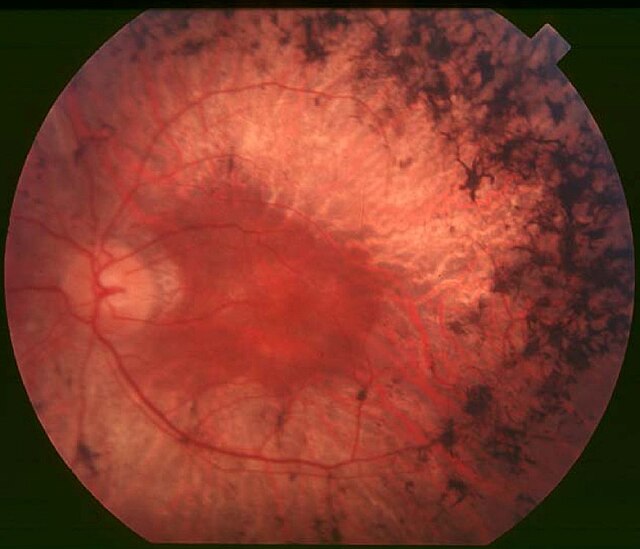
- Fundus photography: Documents pigmentary changes on the retina
- Genetic testing: Helps determine the specific gene mutation and inheritance pattern
Is There a Cure for Retinitis Pigmentosa?
- Vitamin A supplementation: May slow progression in some types (under medical supervision)
- Low vision aids: Magnifiers, special glasses, and adaptive lighting for reading and mobility.
- Orientation and mobility training: Especially in later stages
- Gene therapy and clinical trials: Ongoing research into targeted treatments for specific genetic subtypes (e.g., RPE65 gene therapy)