What to Expect During Your Visit
Whether it’s your first time seeing an eye specialist or you’re returning for follow-up care, knowing what to expect can help you feel at ease. At London Eye & Retina, we provide thorough, patient-centred eye examinations using modern technology and evidence-based practices.
Every consultation is tailored to your unique needs, whether you’re here for a routine screening, vision correction assessment, or evaluation for a specific condition.
Our Step-by-Step Eye Examination Process
Here’s how your visit typically unfolds:
1. Pre-Consultation & Registration
Upon arrival, our front desk team will assist with:
- Registration and verification of your appointment
- Collection of relevant medical and vision history
- Information about your symptoms, previous treatments, or vision goals
If you’re referred by another doctor, please bring your referral letter or any past reports.
2. Preliminary Eye Tests
Before seeing the doctor, our clinical team will perform a series of standard diagnostic tests. These may include:
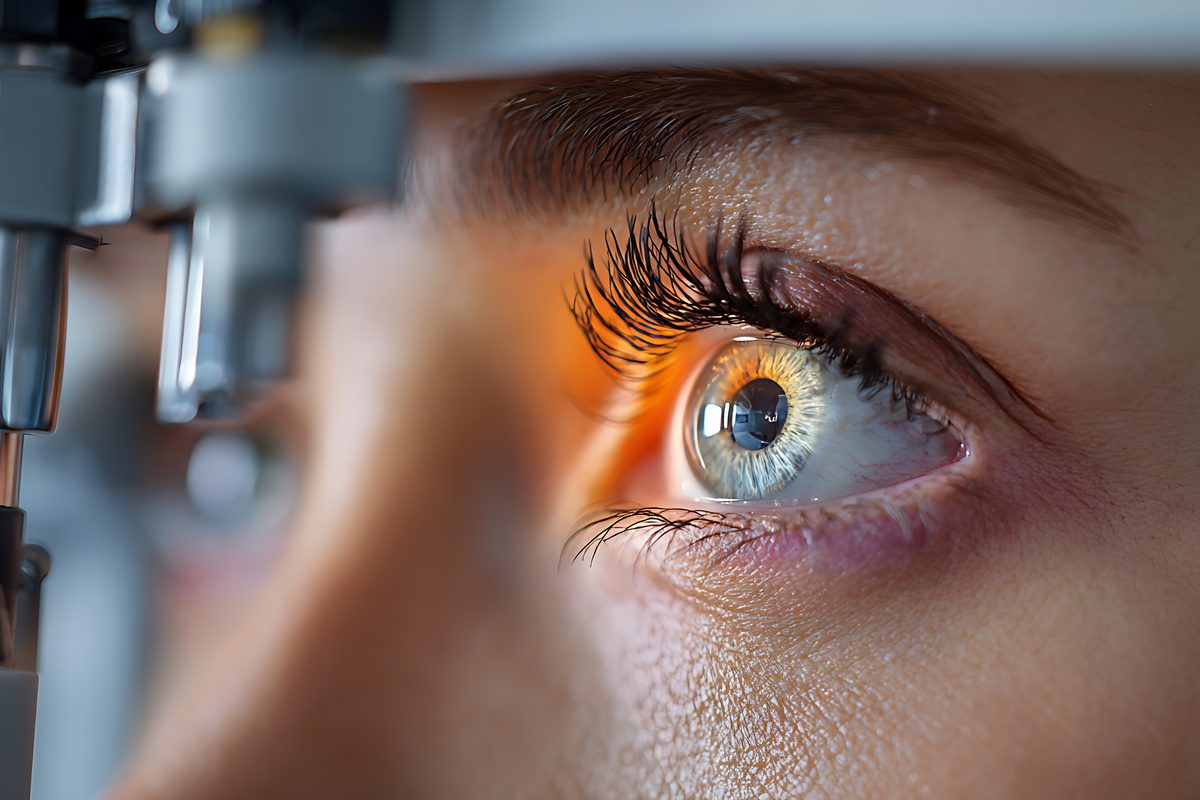
- Visual acuity testing – measures how clearly you see at various distances
- Auto-refraction – provides an estimate of your eye’s prescription
- Tonometry – checks eye pressure (important for glaucoma screening)
- Colour vision and contrast sensitivity – when relevant to your condition
- Pupil dilation (if advised) – to allow better view of the retina
Your pupils may be dilated using eye drops, especially if the doctor needs to examine the retina. This may cause temporary light sensitivity and blurred near vision for a few hours.
3. Consultation with the Eye Specialist
Once preliminary testing is complete, you’ll meet with your consultant, who will:
- Review your medical history and test results
- Ask about any symptoms, lifestyle, or visual needs
- Perform a slit-lamp examination (to assess the front of the eye)
- Conduct a dilated fundus exam (to examine the retina and optic nerve)
- Carry out specialised scans (e.g. OCT, retinal imaging, corneal topography) if needed
This is also the time to ask any questions or clarify concerns you may have.
4. Diagnosis & Management Plan
After the examination, your doctor will explain:
- Any diagnoses made
- Recommended treatment or follow-up steps
- Whether further testing or referrals are needed
- Options for vision correction, medication, or surgery (if relevant)
All recommendations are based on clinical findings, established clinical guidelines and your individual needs.
5. Follow-Up and Prescription
You will receive:
- A summary of your diagnosis and plan
- A prescription for spectacles or medications, if required
- Follow-up appointment schedule (if needed)
- Referral letters or imaging results for other specialists (if relevant)
Our front desk team will guide you on booking your next visit, filling prescriptions, or arranging insurance paperwork.
Additional Notes
- Duration: A complete eye exam usually takes about 2.5 hours, especially if pupil dilation or specialised imaging is required.
- Bring your glasses or contact lens details, especially if you’re coming for a vision correction evaluation.
- Avoid driving immediately after dilation, you may want to bring sunglasses or arrange transport.
Eye Dilation: What to Expect
Dilating drops widen the pupil so the retina and optic nerve can be examined properly. They are an important part of many eye exams, including checks for diabetic eye disease, high myopia, floaters and before vision correction.
- The drops may sting briefly and take about 20–30 minutes to work.
- Afterwards, near vision is blurred and bright light feels uncomfortable for several hours, usually around 4–6 hours and sometimes longer.
- Do not drive until your vision has returned to normal; bring sunglasses and plan your transport.
Rarely, dilation can trigger a sudden rise in eye pressure in people with narrow drainage angles. If you develop severe eye pain, headache, redness, haloes or nausea after dilation, seek urgent care. Seek urgent care: call +65 6908 7533 (24-hour emergency eye care is available).
How to Prepare for Your Eye Exam
- Bring your glasses, contact lenses and contact lens prescription, if you have them.
- Bring a list of your medicines and any eye drops, and any previous eye reports, scans or referral letters.
- If you are coming for a vision correction evaluation, follow the instructions you are given about leaving contact lenses out before the visit.
- Bring your insurance or corporate panel details if you plan to claim.
- Arrange not to drive yourself home in case dilation is needed, and allow about 2.5 hours for the visit.
For children, bring their glasses and any school or previous eye-check reports. See also the first visit guide.
Eye Exam Cost
| Assessment | Fee (incl. 9% GST) |
|---|---|
| Routine eye exam (first visit) | $141.70 |
| Laser vision correction suitability evaluation | $54.50 |
| ICL evaluation | $174.40 |
| Myopia in children (first visit) | $174.40 |
Fees include 9% GST. Additional scans or treatment, if needed, are discussed with you first. See eye screening packages, eye tests for adults and children and fees & packages.
Routine Eye Examination: Adults, first visit
$141.70 incl. 9% GST
Tests included
- Visual acuity
- Auto-refraction
- Auto-keratometry
- Eye pressure check
- Central corneal thickness
- Colour vision testing
- Amsler grid testing
- Fundus photograph
- Doctor’s consultation
Additional tests may be needed, which may incur extra charges.
Routine Eye Examination: Children, first visit
$141.70 incl. 9% GST
Tests included
- Visual acuity
- Auto-refraction
- Auto-keratometry
- Eye pressure check
- Central corneal thickness
- Colour vision testing
- Amsler grid testing
- Assessment of stereovision
- Fundus photograph
- Doctor’s consultation
Additional tests may be needed, which may incur extra charges.
Fees are a guide and may vary with clinical needs. See all fees & packages.
Comprehensive, Patient-First Care
Our aim is to make your visit as smooth and informative as possible. Whether you’re seeking treatment for an existing condition or simply staying proactive about your eye health, we’re here to guide you every step of the way, with clarity and care.
More questions patients ask
Can I claim my eye exam through insurance or a corporate panel? Yes, subject to eligibility. London Eye & Retina accepts corporate panels and insurance plans, and the front desk team can help with insurance paperwork, claim forms and pre-authorisation. Bring your insurance card, guarantee letter or corporate panel details to the appointment. For planned procedures, cost estimates and financial counselling can be provided in advance.
How do I book an eye exam? You can book an eye exam at London Eye & Retina Specialist Centre in Novena by calling +65 6908 7533, sending a WhatsApp message to +65 9833 3141, or emailing info@eyespecialistcentre.com.sg. The clinic is open Monday to Friday 8:30 AM to 5:00 PM, Monday and Thursday evenings 6:30 PM to 9:00 PM, and Saturday 8:30 AM to 12:30 PM.
Can I get a same-day eye exam for an urgent problem? Yes. London Eye & Retina offers same-day appointments for urgent eye concerns and 24-hour emergency eye care on +65 6908 7533. Sudden loss or blurring of vision, a sudden shower of floaters or flashes, a curtain or shadow across your vision, severe eye pain, a chemical splash or an eye injury need urgent care rather than a routine appointment.
What happens at a child’s eye exam? A child’s eye exam uses age-appropriate, child-friendly tests, including objective and play-based methods for younger children so the assessment does not rely entirely on what the child can say. Vision, eye alignment and eye health are checked, and eye drops are often used to relax focusing for an accurate glasses prescription. Bring your child’s glasses and any school or previous eye-check reports.