Cataract Treatment in Singapore
From monitoring an early cataract to day-case surgery and combined procedures, Dr James Ng explains your options and when treatment is needed.

Restoring Clarity When Vision Becomes Clouded
Cataracts are one of the most common age-related eye conditions. Over time, the eye’s natural lens becomes cloudy, making it harder to see clearly, especially in low light or bright glare. For many, this leads to difficulty with reading, driving, or recognising faces.
At London Eye & Retina, we offer a comprehensive approach to cataract treatment, including day-case surgery and combined procedures for patients with glaucoma or retinal conditions. Every treatment plan is guided by your visual needs, eye health, and long-term well-being.
What Are Cataracts?
A cataract forms when the natural lens of the eye becomes cloudy, usually due to age-related changes. Other risk factors include:
- Diabetes
- Prolonged steroid use
- Previous eye injury or surgery
- Genetic predisposition
Symptoms may include:
- Blurred or misty vision
- Sensitivity to bright lights or glare
- Colours appearing faded
- Difficulty seeing at night
- Frequent changes in glasses prescription
When Is Surgery Needed?
Cataract surgery is considered when blurry vision begins to affect daily activities. It is currently the only effective treatment for cataracts and is one of the most commonly performed eye procedures worldwide.
Cataract Surgery
A Day-Case Procedure to Restore Clear Vision
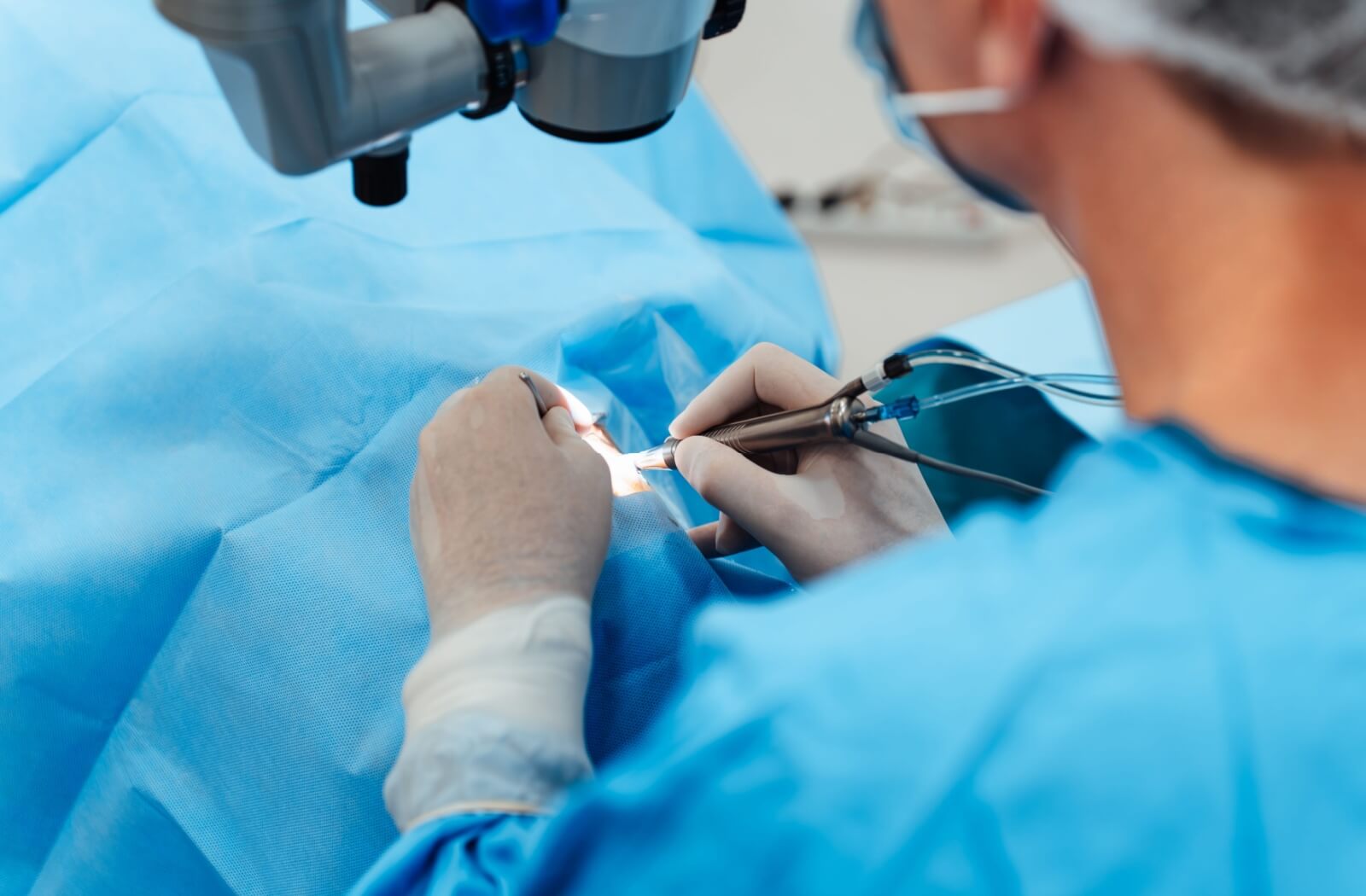
Cataract surgery involves removing the cloudy lens and replacing it with a clear artificial intraocular lens (IOL). At London Eye & Retina, we perform micro-incision cataract surgery under local anaesthesia, typically as a day procedure.
We personalise your care through:
- Preoperative eye measurements and scans
- Careful selection of lens type (monofocal, toric, extended depth-of-focus or multifocal, where suitable)
- Individualised post-operative care and follow-up
Combined Cataract + Glaucoma Surgery
Addressing Two Conditions in a Single Procedure
Patients with both cataracts and glaucoma may benefit from combined surgery, which restores vision while also lowering intraocular pressure.
Options include:
- Cataract surgery with Minimally Invasive Glaucoma Surgery (MIGS) – Uses micro-stents or trabecular bypass to enhance fluid drainage with minimal tissue disruption.
- Cataract surgery with trabeculectomy or glaucoma drainage device – For patients with more advanced or difficult-to-control glaucoma.
Benefits of combined surgery:
- Fewer operations and recovery periods
- In many cases, fewer glaucoma eye drops
- Help with pressure control at the same time as clearer vision
Combined Cataract + Retinal Surgery
For Patients with Coexisting Cataracts and Retinal Conditions
In some cases, cataracts may occur alongside retinal diseases such as:
- Epiretinal membrane
- Macular hole
- Diabetic retinopathy or macular oedema
- Vitreous haemorrhage
- Retinal detachment (past or active)
We offer combined cataract and vitrectomy surgery, performed in a single session by a trained retinal surgeon. This is especially helpful when the cataract limits access to the retina or when both conditions require treatment.
Conditions That May Benefit from Combined Surgery:
- Macular conditions (ERM, macular hole)
- Vitreous opacities or bleeding in diabetic retinopathy
- Post-retinal detachment eyes with coexisting cataract
- Dislocated lens fragments or IOL issues
- Avoids multiple surgeries
- Improved visual access to the retina
- One recovery period instead of two
- Coordinated care between cataract and retinal treatment
This procedure involves removing the cataract, placing an intraocular lens, and performing vitrectomy to address the retinal issue, all during the same operation.
Recovery and Follow-Up
Whether you undergo standard cataract surgery or a combined procedure, most patients notice visual improvement within days. You may require temporary eye drops and activity restrictions to support healing.
Close follow-up is important, especially if you have glaucoma, diabetic eye disease, or other underlying conditions.
Can Cataracts Be Treated Without Surgery?
In the early stages, when a cataract causes only mild blurring, you may manage well with an updated glasses prescription, brighter lighting for reading and anti-glare measures for night driving. Regular checks track how the cataract is changing.
There are no eye drops, supplements or exercises shown to reverse or dissolve a cataract. Once a cataract starts to affect daily activities such as reading, driving or recognising faces, cataract surgery is the only effective treatment. Surgery is rarely urgent, so the timing can usually be planned around your needs, although waiting is not advised if the cataract is very dense or is affecting driving, the risk of falls or the management of other eye conditions.
Cataract Surgery: Lens Options and What to Expect
Cataract surgery is done under local anaesthesia, usually takes under 30 minutes per eye, and you go home the same day. Most people feel mild pressure rather than pain. Your eye is measured beforehand with optical biometry (Haag-Streit EyeStar 900) so the lens power can be calculated.
Lens (IOL) options include:
- Monofocal: clear vision at one distance, usually far, with reading glasses for near
- Toric: also corrects astigmatism
- Extended depth-of-focus (EDOF): a wider range from distance to intermediate
- Multifocal: distance, intermediate and near, with some people noticing halos at night
Dr Ng will recommend a lens based on your eye measurements, eye health and how you use your vision. Read more on our cataract surgery page.
Which Cataract Treatment Do I Need?
| Your situation | Usual approach | Read more |
|---|---|---|
| Cataract only | Cataract surgery with a lens implant | Cataract surgery |
| Cataract and glaucoma | Cataract surgery combined with MIGS, trabeculectomy or a drainage implant | Combined cataract & glaucoma surgery |
| Cataract and a retinal condition (ERM, macular hole, detachment, diabetic eye disease) | Cataract surgery combined with vitrectomy | Combined cataract & retinal surgery |
| Early cataract with mild symptoms | Updated glasses and monitoring | About cataracts |
Cataract Treatment Cost in Singapore
If you are unsure whether your vision changes are due to a cataract, screening is a straightforward first step:
| Assessment | Fee (incl. 9% GST) |
|---|---|
| Cataract basic screening | $57.77 |
| Comprehensive cataract screening | $199.47 |
Cataract surgery fees depend on your lens choice and whether surgery is combined with another procedure, and are quoted after assessment. Surgical fees cover the surgeon’s fee, facility fee, the first week of post-operative reviews and the first set of medications. Cataract surgery is generally MediSave-claimable (up to CPF limits) and often covered by Integrated Shield Plans. See fees & packages for details.
Cataract Screening: What’s Included
Cataract Basic Screening Package
$57.77 incl. 9% GST
Tests included
- Visual acuity
- Auto-refraction
- Auto-keratometry
- Eye pressure check
- Central corneal thickness
- Colour vision testing
- Amsler grid testing
- Relative afferent pupillary defect (RAPD) testing
- Optical Coherence Tomography of the Macula
- Van Herrick angle measurement
- Assessment of Ocular Dominance
- Baseline Eye Dryness Test
- Fundus photograph
- Doctor’s report without consultation
Comprehensive Screening Package: Cataract
$199.47 incl. 9% GST
Tests included
- Visual acuity
- Auto-refraction
- Auto-keratometry
- Eye pressure check
- Colour vision testing
- Amsler grid testing
- Central corneal thickness
- Relative afferent pupillary defect (RAPD) testing
- Optical Coherence Tomography of the Disc and Macula
- Corneal topography
- Van Herrick angle measurement
- Assessment of Ocular Dominance
- Baseline Eye Dryness Test
- Fundus photograph
- Doctor’s consultation
Fees are a guide and may vary with clinical needs. See all fees & packages.
More questions patients ask
Who performs cataract surgery and combined procedures at London Eye & Retina? Cataract surgery and combined cataract and retinal surgery at London Eye & Retina are performed personally by Dr James Ng, Consultant Ophthalmic Surgeon. He is triple fellowship-trained in complex cataract surgery, vitreoretinal surgery and uveitis, holds a Senior Fellowship in Vitreoretinal Surgery at Moorfields, and has performed at least 5,000 cataract surgeries and 3,000 vitrectomies over 20+ years.
What happens at a cataract assessment? A cataract assessment starts with an eye examination that includes visual acuity testing, a slit-lamp examination of the front of the eye, a retinal examination and tonometry to measure eye pressure. These show the presence, type and severity of the cataract. If surgery is planned, your eye is measured on the Haag-Streit EyeStar 900 so the lens power can be calculated.
Is laser cataract surgery better than standard phaco? Phacoemulsification is the standard cataract technique, and laser assistance is considered eye by eye. In phacoemulsification, ultrasound gently breaks up and removes the cloudy lens through a tiny incision. In laser-assisted (bladeless) surgery, a femtosecond laser performs some of the key steps. Dr James Ng will discuss whether laser assistance suits your eye.
How long does recovery take after cataract surgery? Most patients notice clearer vision within a few days of cataract surgery, with full recovery expected in a few weeks. Temporary eye drops and some activity restrictions support healing. After combined cataract and retinal surgery, visual recovery can take several weeks depending on the retinal condition, and after combined glaucoma surgery it can take longer if a trabeculectomy is performed.
Considering Cataract Surgery?
If you’ve been told you have cataracts, or are dealing with blurry vision alongside glaucoma or a retinal condition, our team is here to help. We take the time to explain your options and design a surgical plan that suits your specific eye health.
Book a cataract consultation at London Eye & Retina to explore your treatment options with Dr James Ng.
Cataract + Glaucoma Surgery
Combined cataract and glaucoma surgery treats two conditions in a single operation, removing a cloudy lens to restore vi
Read more
Cataract + Retinal Surgery
Combined cataract and retinal surgery addresses a clouded lens and a problem at the back of the eye in a single operatio
Read more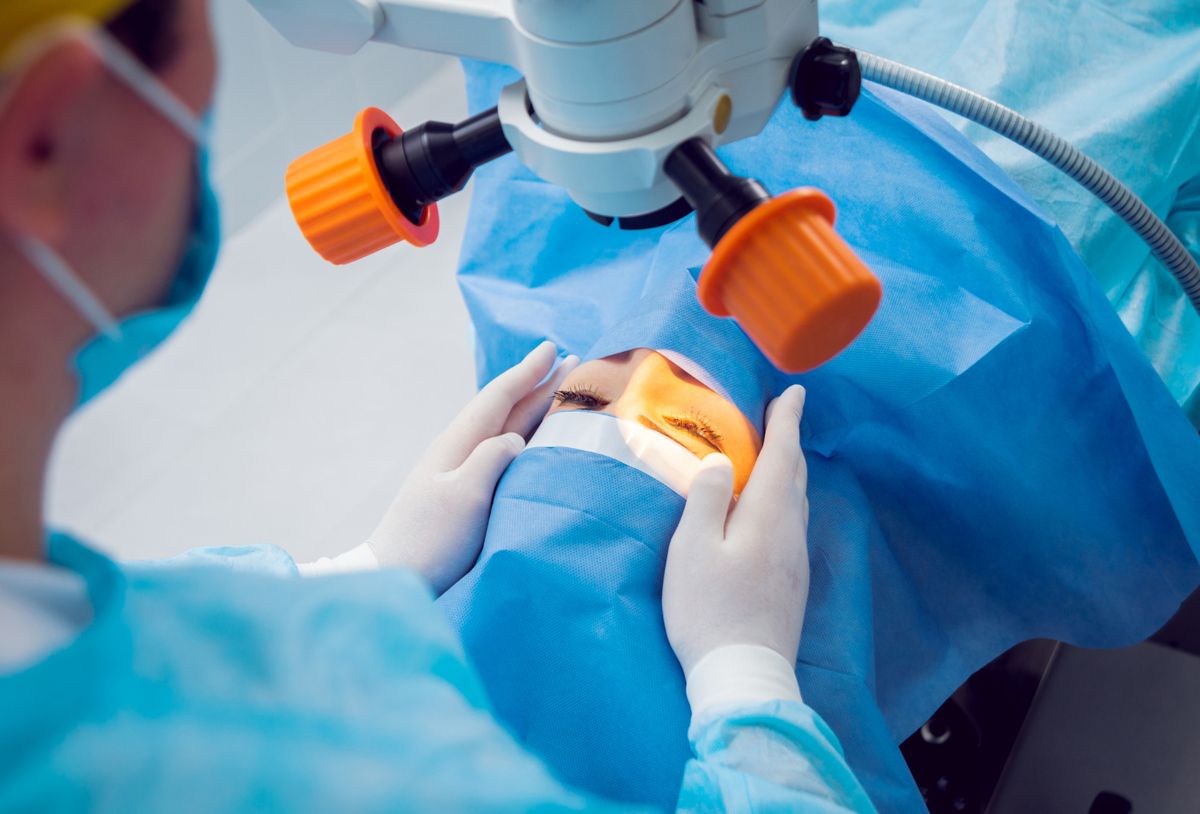
Cataract Surgery
Cataract surgery is a short, day-case procedure that removes the eye's cloudy natural lens and replaces it with a clear
Read more
Glaucoma Laser & Surgery
Glaucoma laser and surgery lower the pressure inside the eye to protect the optic nerve and preserve sight when drops al
Read more