
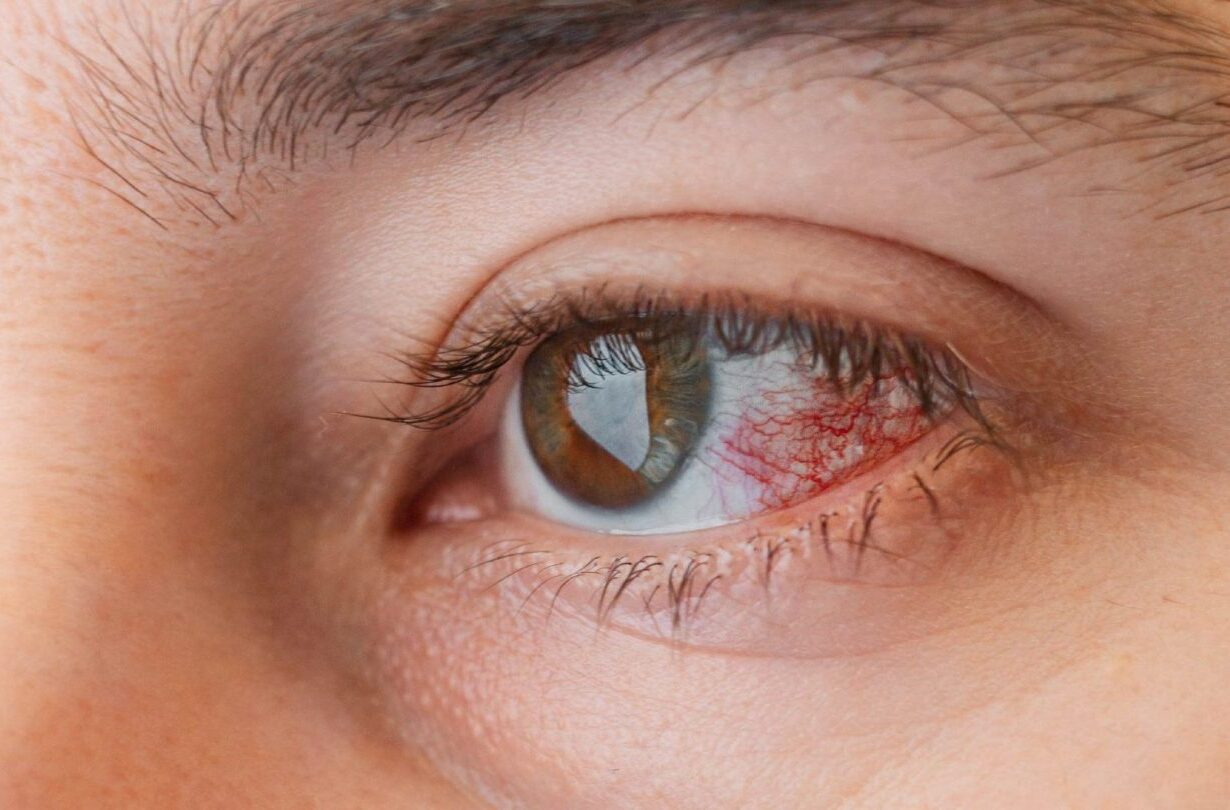
A Red, Painful Eye Should Never Be Ignored
A corneal ulcer is a serious eye condition that involves an open sore on the cornea, the transparent front surface of the eye. Left untreated, it can lead to permanent scarring and, in some cases, significant vision loss. A corneal ulcer is an open sore, or ulcer on the eyeball’s clear front surface (the cornea), usually caused by infection.
At London Eye & Retina, we understand how uncomfortable and alarming eye infections can be. If you’re experiencing a red, painful eye or blurred vision, it’s important to get a thorough eye examination without delay.
What Is a Corneal Ulcer?
The cornea is the clear outer layer of the eye that helps focus light. A corneal ulcer occurs when this layer becomes damaged and infected, often due to bacteria, fungi, viruses, or parasites entering through a break in the surface.
Ulcers can vary in severity, from superficial to deep, central or peripheral, but all require prompt attention to avoid complications.
What Causes Corneal Ulcers?
Several different triggers can lead to corneal ulcers. These include:
- Contact lens wear, especially if worn overnight or not cleaned properly
- Trauma or scratches to the eye, including from foreign bodies or fingernails
- Dry eye syndrome, which disrupts the protective tear film
- Blepharitis or inflammation of the eyelids
- Pre-existing corneal disease such as keratitis
- Viral infections, like herpes simplex
- Fungal infections, especially in those with eye trauma involving plant matter
Understanding the underlying cause is crucial in selecting the right treatment.
What Are the Symptoms?
Common signs and symptoms of a corneal ulcer include:
- Redness and eye pain (often moderate to severe)
- Sensitivity to light (photophobia)
- Tearing or discharge
- The sensation of something stuck in the eye
- Blurred or decreased vision
- A white or grey spot visible on the cornea
- Swelling of the eyelids
If you experience these symptoms, especially with contact lens use or recent trauma, you should seek prompt medical attention.
How Is a Corneal Ulcer Diagnosed?
At London Eye & Retina, we use a step-by-step diagnostic approach, including:
- Slit-lamp examination to assess the location, size, and depth of the ulcer
- Fluorescein staining to highlight corneal defects
- Microbial cultures or corneal scrapings if an infection is suspected
- Ocular history to identify any risk factors (e.g. contact lens use, eye drops, immune conditions)
Our goal is to determine the cause and severity as early as possible to guide appropriate treatment.
How Is It Treated?
Treatment depends on the cause:
- Antibiotic eye drops for bacterial ulcers (broad-spectrum or targeted)
- Antiviral or antifungal drops for viral or fungal ulcers
- Cycloplegic drops to reduce pain from ciliary muscle spasms
- Lubricants or preservative-free tears for comfort
- Close monitoring, often daily, to assess response to treatment
In severe or non-healing cases, surgical options such as corneal debridement or corneal transplantation (keratoplasty) may be considered.
We take a conservative, evidence-based approach and closely monitor healing to adjust treatment as needed.
Can Corneal Ulcers Be Prevented?
Many ulcers are preventable with proper eye care. To reduce your risk:
- Avoid sleeping in contact lenses
- Maintain strict contact lens hygiene
- Treat dry eyes and eyelid conditions early
- Use protective eyewear during activities that risk eye injury
- Avoid self-medicating with over-the-counter eye drops unless directed by an eye care professional
Corneal Ulcers and Contact Lenses: Treat It as Urgent
Contact lens wear is one of the most common causes of corneal ulcers. If you wear lenses and develop a painful, red, light-sensitive eye or blurred vision:
- Remove your lenses straight away and do not put them back in.
- Keep the lenses and case, as they may be tested.
- Seek same-day assessment. Call +65 6908 7533 (24-hour emergency eye care available).
Do not wait to see if it settles, and do not use leftover or over-the-counter drops instead. Sleeping in lenses, swimming or showering in them, and rinsing lenses or cases with tap water all increase the risk.
Antibiotic Eye Drops for Corneal Ulcers
Bacterial ulcers are treated with strong antibiotic drops, often every hour at first, including overnight, and then reduced as the eye improves. A sample may be taken from the ulcer first to identify the organism. It is important to:
- Use the drops exactly as prescribed and not stop early because the eye feels better
- Attend every review, as treatment is adjusted according to how the ulcer responds
- Avoid steroid drops unless your eye specialist prescribes them, as they can worsen some infections
Fungal, viral and Acanthamoeba ulcers need different medicines, which is why examination comes before treatment. See also keratitis.
How Long Does a Corneal Ulcer Take to Heal?
Healing time depends on the cause, size and depth of the ulcer and how early treatment starts. Small bacterial ulcers may improve within days, while deeper, fungal or Acanthamoeba infections can take weeks to months. Some ulcers leave a scar; if it affects vision, options can include rigid contact lenses or, for dense central scars, a corneal transplant.
Seek Care Early for a Red or Painful Eye
Corneal ulcers can progress rapidly, especially in contact lens users. Early treatment often leads to better outcomes and a lower risk of scarring.
If you’re experiencing a red eye, blurred vision, or pain, don’t wait. Call +65 6908 7533 (24-hour emergency eye care available) for a same-day assessment at London Eye & Retina.
More questions patients ask
Do I need a GP referral for a corneal ulcer? No, a GP referral is usually not needed to see an eye specialist at London Eye & Retina Specialist Centre in Novena, and a suspected corneal ulcer should not wait for one. Call +65 6908 7533 for a same-day assessment; 24-hour emergency eye care is available. If you wear contact lenses, remove them straight away and keep the lenses and case, as they may be tested.