
Red Eyes
Red or bloodshot eyes are common and usually harmless, but redness with pain, blurred vision or light sensitivity needs prompt care.
Book a Consultation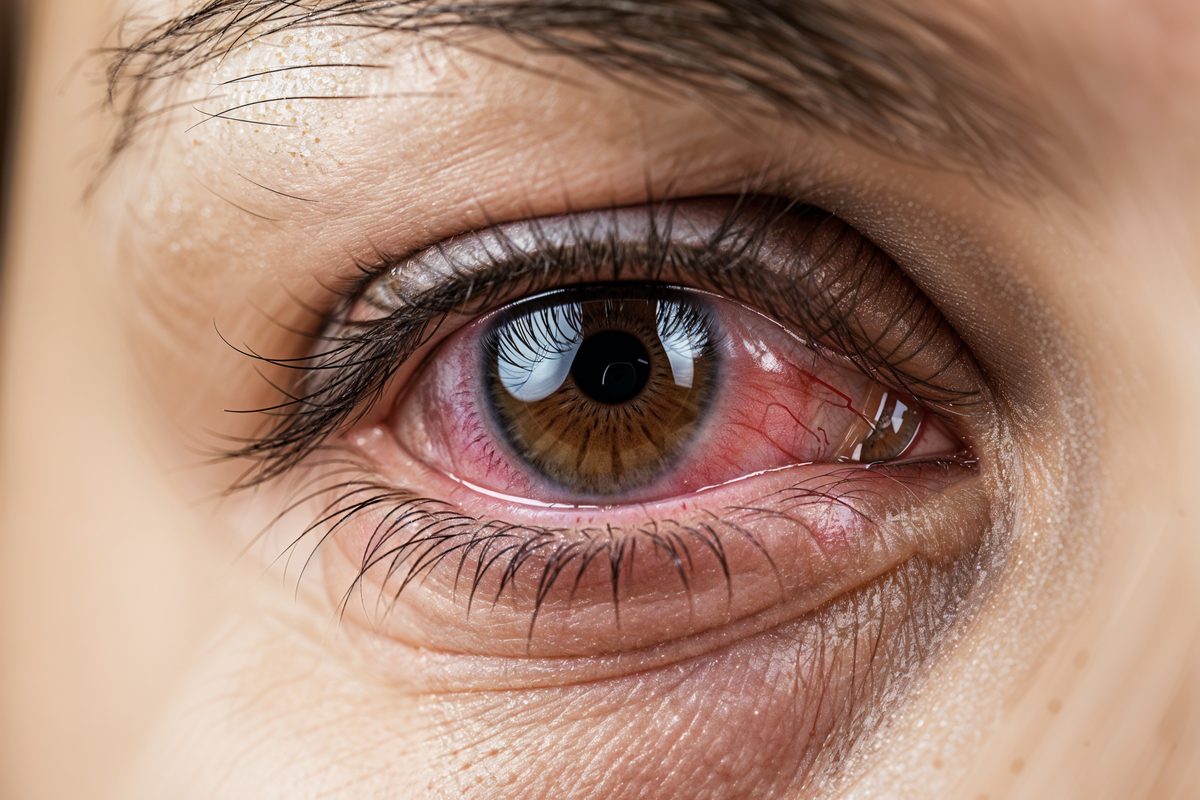
Overview
Redness is one of the most common eye symptoms and is usually harmless, often clearing on its own or with simple treatment. It happens when the tiny surface blood vessels widen in response to irritation, dryness, infection or inflammation.
Most of the time, red eyes are a nuisance rather than a danger. However, redness combined with pain, reduced vision or light sensitivity can point to a more serious problem inside the eye. Knowing which symptoms accompany the redness is the key to knowing how urgently it needs attention.
The pattern also matters: whether one or both eyes are affected, whether there is discharge, and whether it followed contact lens use or injury.
What it feels like
Red eyes may be accompanied by:
- A gritty, itchy or burning sensation
- Watering or a sticky discharge
- A feeling of something in the eye
- Mild soreness or, in some cases, no discomfort at all
- Crusting of the eyelids, especially in the morning
Redness can range from a few visible vessels to a bright, uniformly red patch.
Common causes
There are many causes of red eyes, most of them minor:
- Conjunctivitis: infection (viral or bacterial) or allergy inflaming the surface; often called “pink eye”.
- Dry eye syndrome: irritation from an unstable tear film.
- Subconjunctival haemorrhage: a harmless burst blood vessel causing a bright red patch, often after coughing or straining.
- Blepharitis: inflammation of the eyelid margins.
- Allergies: itchy, watery, red eyes from dust, pollen or pets.
- Contact lens irritation: overwear or poor hygiene.
- Uveitis: inflammation inside the eye, usually with pain and light sensitivity.
- Acute angle-closure glaucoma: a red, painful eye with a sudden pressure rise; an emergency.
Bloodshot eyes, red veins and a red eye with no pain
- Bloodshot eyes with visible red veins in both eyes are most often due to tiredness, dryness, screen use, allergy, smoke or haze, or contact lens overwear.
- A red eye with no pain and normal vision is usually a surface problem, such as mild conjunctivitis, dry eye or a subconjunctival haemorrhage. It is reasonable to watch it for a few days, but see a doctor if it is not improving.
- Redness on one side of the eye, or a single bright red patch, is often a subconjunctival haemorrhage. A raised, tender red patch with aching can be inflammation of the eye wall (episcleritis or scleritis), and deep, severe aching needs prompt assessment.
- A red, painful eye with blurred vision or light sensitivity suggests a problem with the cornea or inside the eye, such as keratitis, uveitis or raised pressure, and needs same-day care.
- Red eyes that keep coming back may be linked to blepharitis, dry eye or allergy, which can be managed once identified. Recurrent burst blood vessels are worth discussing with your doctor, especially if you take blood thinners or have high blood pressure.
Red-flag signs: when to seek urgent care
Most red eyes settle within a week or improve with simple measures. See a specialist if redness is persistent, recurrent or not improving.
Seek urgent, same-day care if red eyes come with any of these red flags:
- Moderate to severe eye pain
- Reduced or blurred vision
- Marked light sensitivity
- Halos around lights or nausea and vomiting (possible acute glaucoma)
- Redness after an eye injury or chemical splash (rinse immediately and seek help)
- Redness in a contact lens wearer with pain or blurred vision (risk of corneal infection)
These features suggest a problem inside the eye rather than a simple surface irritation.
Call +65 6908 7533 now if you have any of these signs. 24-hour emergency eye care is available. If you cannot reach us quickly, or there are stroke signs, go to the nearest A&E or call 995.
What you can do at home vs when to see a doctor
For a mildly red eye with no red-flag signs:
- Artificial tears (lubricating drops) can soothe red, dry or irritated eyes; preservative-free drops are gentler for frequent use.
- A cool compress over closed eyes can ease redness from allergy or irritation.
- Take a break from contact lenses and eye make-up, and get enough sleep.
- Wash your hands often and do not share towels if you might have conjunctivitis.
- Avoid regular use of "anti-redness" whitening drops; they only mask redness, which can rebound when you stop.
See a doctor if redness has not improved after a few days, keeps coming back, or there is discharge.
Seek urgent care for a red eye with moderate or severe pain, reduced vision, light sensitivity, halos or nausea, after an injury or chemical splash, or in a contact lens wearer with pain. Call +65 6908 7533 (24-hour emergency eye care available).
How red eyes are assessed at our clinic
The cause of red eyes is usually found on examination:
- History: how it started, discharge, contact lens use, injury or allergy
- Visual acuity testing: checking your sight
- Slit-lamp examination: a magnified view of the surface and front of the eye
- Fluorescein staining: dye to reveal scratches, ulcers or dryness
- Tonometry: measuring eye pressure if glaucoma is suspected
- Swabs: occasionally taken if a specific infection is suspected
At our Novena clinic, Dr James Ng examines the eye under the slit lamp and checks the pressure where needed, to tell a simple surface redness apart from infection of the cornea, inflammation inside the eye or acute glaucoma.
Treatment options
Treatment depends on the underlying cause:
- Lubricating drops for dry eye and mild irritation
- Antihistamine or anti-allergy drops for allergic redness
- Antibiotic drops for bacterial conjunctivitis (viral cases usually clear on their own)
- Lid hygiene and warm compresses for blepharitis
- Anti-inflammatory treatment for uveitis, under specialist care
- Urgent pressure-lowering treatment for acute glaucoma
- A subconjunctival haemorrhage needs no treatment and clears in one to two weeks
Frequently asked questions
Is a red eye contagious? Viral and bacterial conjunctivitis can be contagious. Wash your hands often, avoid sharing towels, and see a doctor if it is not improving.
Why is part of my eye bright red? A single bright red patch is usually a subconjunctival haemorrhage, a harmless burst vessel that clears by itself, though recurrent episodes should be checked.
Can contact lenses cause red eyes? Yes. Overwear or poor hygiene can irritate the eye and, more seriously, lead to infection. Remove your lenses and seek care if you have pain or blurred vision.
When should I worry about a red eye? Redness with pain, reduced vision, light sensitivity or halos needs prompt assessment, as it can indicate a problem inside the eye.
More questions patients ask
How long is pink eye contagious? Viral and bacterial conjunctivitis (pink eye) spread through contact with eye discharge, usually via hands, towels and pillowcases. Viral conjunctivitis can remain contagious for as long as the eye is red and watery, which may be one to two weeks. Allergic and irritant conjunctivitis are not contagious. Follow your doctor’s and your school or workplace’s advice on when to return.
What is the fleshy red growth on the white of my eye? A fleshy, pinkish growth on the white of the eye, usually on the side nearest the nose, is often a pterygium, a benign growth linked to long-term sun exposure and common in sunny climates such as Singapore. It can cause redness, grittiness and, if it grows onto the cornea, blurred vision. Eye drops ease symptoms but do not remove it; surgery is considered when needed.
How can I tell uveitis from conjunctivitis? Uveitis, inflammation inside the eye, usually causes an aching pain often worse with light, marked light sensitivity, blurred vision and watering without discharge. Conjunctivitis is usually gritty or itchy rather than painful, with mild light sensitivity, normal vision and often sticky discharge. Uveitis can threaten sight through glaucoma, cataract and macular oedema, so a red, aching, light-sensitive eye needs same-day assessment.
Is a red eye in a newborn baby serious? A newborn with a red or discharging eye should be seen urgently, as some infections passed on at birth need prompt treatment. In older children, conjunctivitis is common and often spreads in childcare and school, and most cases are mild. In babies, a persistently watery or sticky eye can also be due to a blocked tear duct, which an eye specialist can assess.
Key takeaways
- Red eyes are usually harmless and often settle on their own.
- Redness with pain, reduced vision, light sensitivity or halos is a warning sign, seek same-day care.
- Contact lens wearers with a red, painful eye should be seen urgently.
- A bright red patch is often a harmless burst blood vessel.
- Treatment depends on the cause, from lubricants to antibiotics or urgent care.
Have red eyes that won’t settle? Book an assessment with Dr James Ng for the right diagnosis.