
Thyroid Eye Disease (Graves' Eye Disease)
Thyroid eye disease is an autoimmune condition in which the tissues around the eyes become inflamed and swollen, often causing bulging, red and irritated eyes.
Book a Consultation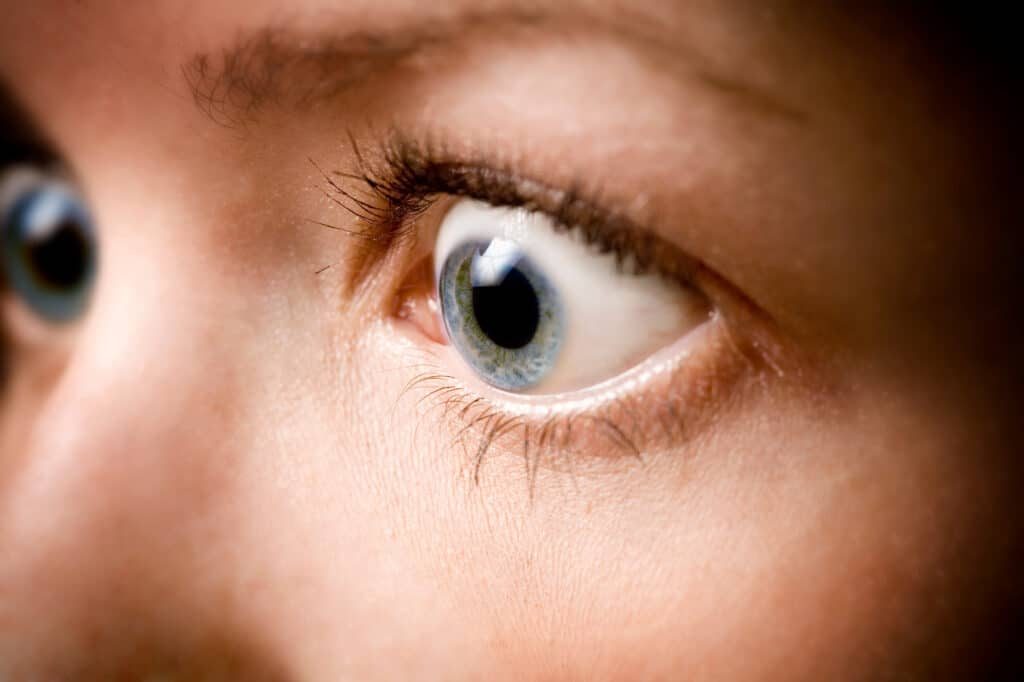
Overview
Thyroid eye disease (also called Graves’ eye disease or thyroid-associated orbitopathy) is an autoimmune condition in which the body’s immune system mistakenly targets the muscles and fatty tissue behind and around the eyes. This causes inflammation and swelling within the eye socket (orbit), which can push the eyes forward and affect how the eyelids and eye muscles work. Thyroid eye disease (TED) is also known as Graves’ ophthalmopathy or Graves’ orbitopathy, because it most often occurs with Graves’ disease.
It is most commonly linked to an overactive thyroid gland (Graves’ disease), but it can also occur in people with an underactive or normally functioning thyroid. The condition typically has an active phase, lasting months to a couple of years, during which inflammation waxes and wanes, followed by a stable, “burnt-out” phase. Smoking strongly worsens the disease, and early recognition allows steps to protect the eyes and reduce long-term effects.
Symptoms
Symptoms range from mild irritation to sight-threatening changes:
- Bulging or protruding eyes (proptosis)
- Red, gritty, watery or dry eyes
- Swelling and puffiness of the eyelids
- A staring appearance and lid retraction (the upper lid pulled up)
- Difficulty closing the eyes fully
- Double vision from swollen eye muscles
- Pain or pressure behind the eyes, worse on looking around
- In severe cases, reduced or dim vision or loss of colour vision
Causes
Thyroid eye disease is driven by an autoimmune process. Antibodies that affect the thyroid gland also stimulate tissues in the eye socket, causing the eye muscles and fat to swell. As these tissues expand within the confined bony orbit, they push the eyeball forward and can compress important structures. Key points include:
- It is most often associated with Graves’ disease (overactive thyroid)
- It can occur with normal or underactive thyroid function
- The eye disease and the thyroid problem may not appear at the same time
- The severity of the eye disease does not always match the thyroid levels
Risk factors
- A diagnosis of Graves’ disease or another thyroid disorder
- Smoking: the single most important modifiable risk factor
- Female sex, though the disease can be more severe in men
- Poorly controlled thyroid hormone levels
- A family history of thyroid or autoimmune disease
- Radioactive iodine treatment for the thyroid in some cases
Complications
Most people have mild to moderate disease, but complications can be serious. Difficulty closing the eyes can lead to exposure and drying of the cornea, causing pain and, if severe, corneal damage and ulceration. Persistent double vision affects daily life and driving. In a small number of cases, swelling compresses the optic nerve (dysthyroid optic neuropathy), threatening vision, this is an emergency. Long-standing disease can also leave lasting changes in eye position, eyelid position and appearance.
Diagnosis
Diagnosis involves both eye assessment and thyroid evaluation, often with input from an endocrinologist:
- Clinical examination: assessing eye protrusion, eyelid position, eye movements and eye closure
- Vision and colour vision testing: to check for optic nerve involvement
- Slit-lamp examination: to assess the cornea and eye surface
- Imaging (CT or MRI of the orbits): to show enlarged eye muscles and swollen tissue
- Thyroid blood tests: to assess thyroid function and relevant antibodies
Grading the activity and severity of the disease guides the intensity of treatment.
Treatment
Treatment aims to control inflammation during the active phase, protect the eyes, and correct any lasting changes once the disease is stable:
- Stopping smoking: the most important step to improve outcomes
- Controlling thyroid function: working with an endocrinologist to stabilise hormone levels
- Lubricating drops and ointments: to relieve dryness and protect the eye surface, especially if the lids do not close fully
- Anti-inflammatory treatment: corticosteroids or other immune-modulating therapies for moderate to severe active disease
- Orbital radiotherapy: used in selected cases to reduce inflammation
- Surgery: once the disease is stable, procedures may address eye protrusion (orbital decompression), double vision (eye muscle surgery) or eyelid position; urgent surgery may be needed if the optic nerve is threatened
Care is usually shared between an eye specialist and an endocrinologist, and treatment is tailored to the phase and severity of the disease.
When to see a doctor
See an eye specialist if you notice bulging eyes, persistent redness, eyelid swelling, double vision, or difficulty closing your eyes, especially if you have a thyroid condition.
Seek urgent care for a rapid drop or dimming of vision, loss of colour vision, severe eye pain, or an eye that cannot close and is becoming very sore, as these may signal optic nerve compression or corneal damage. Call +65 6908 7533 straight away. 24-hour emergency eye care is available.
Living with Thyroid Eye Disease: Eye Care at Home
- Stop smoking: the single most helpful step you can take
- Lubricating drops and gels: use regularly for gritty, dry eyes; a thicker gel at night helps if your lids do not close fully (see dry eye)
- Sunglasses: help with light sensitivity and wind
- Sleeping with your head raised: may reduce morning puffiness
- Prism glasses: can help mild double vision while the disease is active
Selenium supplements are sometimes suggested for mild, early disease; ask your doctor before starting any supplement.
Thyroid Eye Disease Care at London Eye & Retina
Dr James Ng assesses vision, colour vision, eye pressure and the eye surface, and examines the optic nerve, using OCT imaging where helpful, to check for signs of optic nerve involvement. Regular reviews during the active phase help to pick up changes early.
Care is shared with your endocrinologist. When specialised treatments such as immune-modulating therapy, orbital radiotherapy or orbital, eye muscle or eyelid surgery are needed, we coordinate referral to the appropriate specialist teams. Read more about bulging eyes (proptosis) and double vision.
Prevention
The condition cannot always be prevented, but its severity can be reduced:
- Do not smoke: quitting significantly lowers the risk and severity
- Keep thyroid hormone levels well controlled with your doctor
- Attend regular reviews if you have Graves’ or another thyroid disorder
- Report new eye symptoms early so treatment can start promptly
- Use lubricating drops to protect the eye surface as advised
Frequently asked questions
Does treating my thyroid cure the eye disease? Controlling thyroid levels helps, but the eye disease can follow its own course and may need separate treatment. The two are managed together but do not always improve at the same time.
Will my bulging eyes go back to normal? Some swelling settles as the active phase ends. Any lasting protrusion can often be improved with surgery once the disease has stabilised.
Why is smoking such a problem? Smoking markedly increases the risk of developing thyroid eye disease and makes it more severe and harder to treat. Stopping is one of the most effective things you can do.
Is thyroid eye disease sight-threatening? Most cases are mild, but a minority can threaten vision through corneal damage or optic nerve compression. Any sudden change in vision needs urgent assessment.
More questions patients ask
Is thyroid eye disease painful? Thyroid eye disease can cause pain or pressure behind the eyes that is worse on looking around, along with red, gritty, watery or dry eyes. Lubricating drops and gels can ease discomfort. Severe eye pain, a rapid drop in vision, loss of colour vision or an eye that cannot close and is becoming very sore needs urgent care: call +65 6908 7533.
Is thyroid eye disease more common in women? Thyroid eye disease is more common in women, although it can be more severe in men. Other risk factors include Graves’ disease or another thyroid disorder, smoking, poorly controlled thyroid hormone levels, a family history of thyroid or autoimmune disease and, in some cases, radioactive iodine treatment for the thyroid. Smoking is the most important risk factor you can change.
How is double vision from thyroid eye disease treated? Double vision in thyroid eye disease comes from swollen eye muscles. While the disease is active, prism glasses can help mild double vision, and anti-inflammatory treatment may be used for moderate to severe active disease. Once the disease is stable, eye muscle surgery may address lasting double vision. At London Eye & Retina, referral to the appropriate specialist team is coordinated when needed.
Can radioactive iodine make thyroid eye disease worse? Radioactive iodine treatment for the thyroid is listed as a risk factor for thyroid eye disease in some cases. Because thyroid treatment and eye disease are linked, care is usually shared between an eye specialist and an endocrinologist. If you have thyroid eye disease and are considering thyroid treatment, discuss the options with both doctors and report any new eye symptoms early.
Do I need regular eye checks if I have Graves’ disease? Regular eye reviews are advisable if you have Graves’ disease or another thyroid disorder, so thyroid eye disease can be picked up and treated early. At London Eye & Retina Specialist Centre in Novena, Dr James Ng checks vision, colour vision, eye pressure, the eye surface and the optic nerve, using OCT imaging where helpful. Reviews are especially important during the active phase.
Key takeaways
- Thyroid eye disease is an autoimmune condition that inflames the tissues around the eyes.
- It is often linked to Graves’ disease but can occur with normal or underactive thyroid function.
- Smoking greatly worsens it; stopping is the most important modifiable step.
- Symptoms range from irritation and bulging to sight-threatening optic nerve compression.
- Care is shared with an endocrinologist, and stable disease can be corrected with surgery.