
Halos Around Lights
Halos around lights are bright, glowing rings or circles you see surrounding light sources, such as headlights, streetlamps or light bulbs, especially at night.
Book a Consultation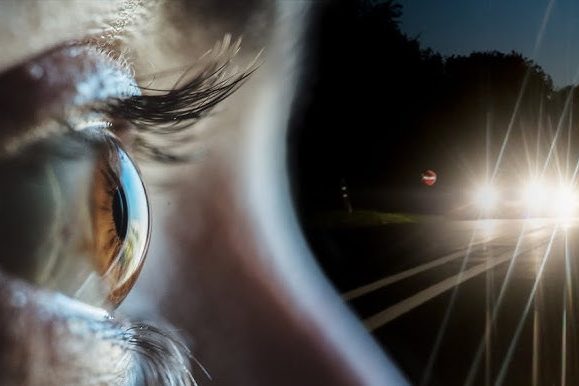
Overview
Halos appear when light entering the eye is scattered or bent abnormally instead of being focused cleanly onto the retina. This scattering creates a glowing ring around the light source. A little glare and haloing at night is common, particularly with tiredness or after being in the dark, and is often harmless.
However, persistent or new halos can be an important clue to an eye condition, most commonly a cataract, but sometimes glaucoma or a corneal problem. When halos appear suddenly alongside eye pain, redness and nausea, they can be a warning sign of a serious rise in eye pressure that needs emergency care.
Knowing what else accompanies the halos helps determine how urgently they need attention.
What it feels like
Halos may involve:
- Glowing rings or circles around lights, especially at night
- Increased glare from headlights and streetlamps
- Starbursts or streaks radiating from light sources
- Difficulty driving at night because of dazzle
- Blurring or reduced contrast alongside the halos
They are usually most noticeable in dim surroundings, when the pupil is wider.
Common causes
Halos can arise from the lens, cornea or drainage system of the eye:
- Cataract: clouding of the lens scatters light; a very common cause of halos and glare.
- Acute angle-closure glaucoma: a sudden pressure rise causing halos with pain, redness and nausea; a medical emergency.
- Corneal swelling or problems: including dryness and certain corneal conditions.
- Refractive error: significant short-sightedness or astigmatism, especially if uncorrected.
- After refractive surgery: temporary halos can follow procedures such as LASIK.
- Dry eye syndrome: an unstable tear film scatters light.
Rainbow halos, halos in one eye, and halos after surgery
- Rainbow-coloured halos, especially with a red, painful eye or headache, can be a sign of corneal swelling from a sudden rise in eye pressure (acute angle-closure glaucoma). This is an emergency.
- Halos in one eye only are more likely to come from a problem in that eye, such as a cataract developing faster on one side, corneal swelling or a pressure problem, and should be checked.
- Halos with blurred vision that build up over months, often worst when driving at night, are typical of cataract.
- Halos after cataract surgery: some halos can occur in the early weeks, and some lens implant designs, particularly multifocal lenses, are more likely to cause them. These often become less noticeable over time as the brain adapts. Months or years later, clouding of the thin capsule behind the lens implant can cause glare again; this is usually treated with a quick laser procedure.
- Halos after laser vision correction (such as LASIK) often settle during healing. Mention persistent or worsening halos at your follow-up.
Red-flag signs: when to seek urgent care
Book an eye assessment if you notice new, persistent or worsening halos, as they often indicate a treatable condition such as cataract.
Seek emergency, same-day care if halos appear suddenly with:
- Severe eye pain
- Redness of the eye
- Nausea or vomiting
- Rapidly blurred or reduced vision
This combination can indicate acute angle-closure glaucoma, where eye pressure rises sharply. It can permanently damage sight within hours, so do not wait, seek immediate care.
Call +65 6908 7533 now if you have any of these signs. 24-hour emergency eye care is available. If you cannot reach us quickly, or there are stroke signs, go to the nearest A&E or call 995.
What you can do at home vs when to see a doctor
Things that may reduce glare and halos while you wait for an assessment:
- Keep your glasses and car windscreen clean, inside and out.
- Use lubricating drops if your eyes are dry, as a smoother tear film scatters less light.
- Make sure your glasses prescription is up to date; an anti-reflective coating may help some people.
- Avoid driving at night if glare makes you feel unsafe, until your eyes have been checked.
Book an assessment for any new, persistent or worsening halos.
Seek emergency care if halos appear suddenly with eye pain, redness, headache, nausea or vomiting, or blurred vision. Call +65 6908 7533 (24-hour emergency eye care available).
How halos are assessed at our clinic
The cause of halos is identified through examination:
- History: when the halos occur, and any pain, redness or vision change
- Visual acuity testing: checking your sight
- Slit-lamp examination: a magnified view of the cornea and lens
- Tonometry: measuring eye pressure, important if glaucoma is suspected
- Gonioscopy: examining the eye’s drainage angle
- Corneal assessment: to check for swelling or surface problems
At our Novena clinic, Dr James Ng checks the cornea, lens and eye pressure, and the drainage angle where needed, to work out whether halos come from a cataract, the cornea, the tear film or a pressure problem.
Treatment options
Treatment depends on the underlying cause:
- Cataract surgery: replacing a clouded lens usually reduces cataract-related halos and glare
- Urgent pressure-lowering treatment and laser: for acute angle-closure glaucoma
- Lubricating drops: for dry eye and mild surface scatter
- Updated glasses or contact lenses: for refractive causes
- Time and reassurance: halos after refractive surgery often settle as the eye heals
Once the cause is treated, halos often improve.
Frequently asked questions
Are halos around lights serious? Often they are due to a treatable cause like cataract. But sudden halos with eye pain, redness and nausea are an emergency and need immediate care.
Why do I see halos when driving at night? Night driving widens the pupil, so any light scatter, from cataract, dryness or refractive error, becomes more obvious. An assessment can find the cause.
Can cataract surgery get rid of halos? When halos are caused by a cataract, replacing the clouded lens usually reduces them and improves night vision. Some lens implant designs, particularly multifocal lenses, can themselves cause some halos, which Dr Ng will discuss when choosing a lens.
I had LASIK and now see halos, is that normal? Some halos can occur after refractive surgery and often settle during healing. If they persist or worsen, mention it at your follow-up.
More questions patients ask
Can dilating eye drops cause halos? Rarely, the drops used to dilate the pupils during an eye examination can trigger a sudden rise in eye pressure in people with narrow drainage angles. Seek urgent care if you develop severe eye pain, headache, redness, halos or nausea after dilation, and call +65 6908 7533 for 24-hour emergency eye care. More commonly, dilation simply blurs near vision and makes bright light uncomfortable for several hours.
How much does a cataract or glaucoma screening cost in Singapore? At London Eye & Retina Specialist Centre in Novena, Cataract Basic Screening costs $57.77 and Comprehensive Screening, Cataract costs $199.47. Glaucoma Basic Screening costs $98.10 and Comprehensive Screening, Glaucoma costs $239.80. All fees include 9% GST. Fees are a guide and may vary with clinical needs, so please confirm with the clinic.
Is cataract surgery covered by MediSave? Cataract surgery is generally MediSave-claimable up to the CPF surgical withdrawal limit, and most private Integrated Shield Plans cover cataract day surgery. The clinic team can help with Letters of Guarantee and pre-authorisation. Cataract surgery is performed under local anaesthesia, usually takes under 30 minutes per eye, and you go home the same day.
Which lens implant causes fewer halos after cataract surgery? The lens implant chosen affects night-time halos after cataract surgery. Multifocal lenses are more likely to cause halos, while extended depth of focus (EDOF) lenses give a continuous range from distance to intermediate with fewer night-time glare and halo effects than multifocal lenses. Monofocal and toric lenses are also available, and Dr James Ng discusses these trade-offs when helping you choose a lens.
Key takeaways
- Halos occur when light is scattered instead of focused cleanly on the retina.
- Cataract is a common and treatable cause.
- Sudden halos with pain, redness and nausea signal possible acute glaucoma, an emergency.
- Night driving makes halos more noticeable because the pupil widens.
- Treatment depends on the cause and often improves the halos.
Seeing halos around lights? Book an assessment with Dr James Ng to identify the cause.