Noticing that the centre of what you see looks blurry, while your side (peripheral) vision seems unaffected, can feel confusing and unsettling. Many people try to compare one eye with the other, or test themselves by covering one eye at a time, wondering what this change might mean.
This article explains how central and peripheral vision work, what may cause central vision blurring, and when it’s appropriate to see an eye specialist.
What’s the difference between central vision and peripheral vision?
Your vision isn’t processed evenly across the eye.
- Central vision is responsible for seeing fine details, reading, recognising faces, and focusing straight ahead
- Peripheral vision helps with awareness of your surroundings and movement on the sides
Central vision relies heavily on a small area of the retina called the macula. When changes affect this area, central clarity may reduce while side vision remains relatively clear.
Key points to note:
- Central vision = detail and sharp focus
- Peripheral vision = side awareness and motion
- Changes in one do not always affect the other
Why can central vision become blurry while side vision stays clear?
This pattern often suggests that the issue involves the macula or central retina, rather than the entire eye.
Possible contributors include:
- Conditions affecting the macula
- Swelling or changes in the central retina
- Alterations in how light is focused on the retina
Because peripheral vision uses a different part of the retina, it may remain unaffected in the early stages of some eye conditions.
Is blurry central vision always sudden?
Not always. Central vision changes can develop in different ways.
Some people notice:
- Gradual blurring when reading or using screens
- Straight lines appearing slightly distorted
- A faded or darker patch in the centre of vision
Others may experience a more noticeable or sudden change, which should be assessed promptly.
Could this be related to macular conditions?
Yes, several eye conditions primarily affect the macula and central vision. These include age-related changes, retinal swelling, or other medical retina conditions.
It’s important to note:
- Symptoms can vary widely between individuals
- Early stages may be subtle
- Only a proper eye examination can determine the cause
Self-diagnosis based on symptoms alone isn’t reliable, as different conditions can feel similar in the early stages.
When should you see an eye specialist for central vision changes?
You should consider an eye assessment if you notice:
- Persistent blurring in the centre of vision
- Difficulty reading despite updated spectacles
- Distortion of straight lines
- A new dark or blurred spot in central vision
- Changes affecting daily tasks like driving or screen use
Early assessment helps clarify what’s happening and whether monitoring or treatment is needed.
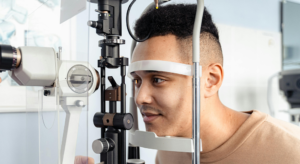
How is central vision assessed during an eye examination?
An eye specialist may use:
- Detailed retinal examination
- Imaging of the macula
- Vision tests focused on central clarity
These assessments help determine whether changes are related to the retina, the macula, or other parts of the eye.
Frequently Asked Questions (FAQs)
- Can central vision blur affect just one eye?
Yes. Some conditions affect one eye first, which is why covering each eye separately can reveal differences. - Is blurry central vision always permanent?
Not necessarily. Some causes are temporary or manageable, depending on the diagnosis and timing. - Does peripheral vision stay normal forever in these cases?
Peripheral vision may remain normal in early stages, but changes can occur over time depending on the condition. - Should I update my glasses first before seeing a specialist?
If central blurring persists despite recent spectacle changes, an eye examination is advisable. - Is central vision blurring considered an eye emergency?
Sudden or rapidly worsening changes should be assessed promptly to rule out urgent causes.
When Central Vision Changes, Clear Answers Matter
Blurry central vision isn’t something to ignore, especially when it starts affecting everyday activities. An eye assessment can help clarify what’s happening and guide next steps, whether that involves monitoring, further testing, or treatment planning.
At London Eye & Retina Specialist Centre, care is focused on careful evaluation, clear explanations, and personalised management based on your individual eye health.
If you’ve noticed changes in your central vision, consider booking a consultation for a comprehensive eye assessment.