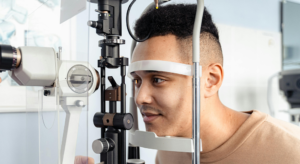
Macular oedema is a common complication of diabetic retinopathy, yet many people are surprised to learn they can have it even when their vision still feels normal. This often leads to delayed reviews, despite ongoing changes at the back of the eye.
Understanding how and why macular oedema develops can help people with diabetes make more informed decisions about eye care and follow-up.
Key Pointers
- Macular oedema can develop before noticeable vision changes occur
- It is caused by leakage from damaged retinal blood vessels
- Long-standing or poorly controlled diabetes increases risk
- Symptoms may be subtle or absent in early stages
- Regular retinal assessments help detect changes early
What Is Macular Oedema in Diabetic Retinopathy?
Macular oedema refers to swelling of the macula, the central part of the retina responsible for detailed and sharp vision.
In diabetic retinopathy, prolonged high blood sugar levels can damage small retinal blood vessels. Over time, these vessels may become leaky, allowing fluid to accumulate in the macula.
This swelling can affect vision clarity, but not always immediately.
Why Can Macular Oedema Occur Even When Vision Seems Normal?
Many people expect eye conditions to cause obvious symptoms early on. However, macular oedema often develops gradually, and the brain may compensate for subtle changes.
Reasons symptoms may not be obvious include:
- Swelling may be mild in the early stages
- Changes can occur outside the very centre of the macula initially
- One eye may compensate for the other
- Vision changes may be noticeable only in specific situations (e.g. reading fine print)
This is why macular oedema is sometimes detected during routine retinal imaging rather than through symptoms alone.
How Does Diabetes Lead to Leaky Retinal Blood Vessels?
Persistently elevated blood sugar levels can weaken the walls of small blood vessels in the retina. Over time, this may lead to:
- Increased vessel permeability
- Breakdown of the blood-retinal barrier
- Fluid and protein leakage into the retinal tissue
Factors that influence this process include:
- Duration of diabetes
- Blood sugar control over time
- Blood pressure levels
- Coexisting kidney or vascular conditions
The longer diabetes is present, the higher the likelihood of retinal changes developing.
What Are the Subtle Signs of Macular Oedema to Watch For?
Even when vision seems “fine,” some people may notice:
- Slight blurring when reading
- Distortion of straight lines
- Difficulty with contrast or fine details
- Fluctuating clarity throughout the day
These symptoms may be mild and easily overlooked, especially in the early stages.
How Is Macular Oedema Detected If Symptoms Are Minimal?
Diagnosis usually involves a combination of:
- Dilated retinal examination
- Retinal imaging, such as optical coherence tomography (OCT)
- Photographic documentation to monitor changes over time
These tests allow eye specialists to identify fluid accumulation and assess its impact, even before significant visual symptoms develop.
Why Regular Eye Reviews Matter for People With Diabetes
Because macular oedema can progress silently, regular retinal assessments are an important part of diabetes care.
Timely detection allows for:
- Monitoring of disease progression
- Discussion of management options when appropriate
- Coordination with overall diabetes control
Early identification does not always mean immediate treatment is required, but it supports informed and timely decision-making.
FAQs
1. Can macular oedema go unnoticed for a long time?
Yes. Many people do not experience noticeable vision changes until swelling becomes more advanced.
2. Does good eyesight mean my diabetic retinopathy is stable?
Not necessarily. Structural changes in the retina can occur even when vision seems unaffected.
3. Is macular oedema linked to blood sugar control?
Long-term blood sugar levels and duration of diabetes are important contributing factors.
4. Can macular oedema affect one eye more than the other?
Yes. It can be asymmetric, which is why changes may not be immediately obvious.
5. How often should people with diabetes have their eyes checked?
The recommended frequency depends on individual risk factors and existing retinal findings. Your eye specialist can advise on an appropriate review schedule.
Your Vision May Feel Fine, But Your Retina May Be Changing
Macular oedema in diabetic retinopathy does not always announce itself with early symptoms. Regular eye assessments play an important role in detecting changes that may not yet be noticeable. If you have diabetes, an eye review can help clarify what is happening at the back of your eyes and guide appropriate monitoring or care.
Book an appointment with our clinic to arrange a retinal assessment.
Learn more about how diabetes can affect your vision over time.