Key Takeaways
- Night blindness is a symptom, not a diagnosis, and can indicate various eye or health issues.
- Early signs include slow dark adaptation, glare sensitivity, and difficulty navigating dimly lit environments.
- Common causes include retinal conditions, vitamin A deficiency, cataracts, and high myopia.
- Eye specialists use retinal exams, low-light testing, and lens assessments to evaluate night vision problems.
- Seek assessment if symptoms worsen, affect night driving, or interfere with daily activities.
Night blindness (nyctalopia) refers to difficulty seeing in low-light or dark environments. It is not a condition by itself but a symptom of various eye or health issues. Understanding why it happens can help you know when it is appropriate to seek medical assessment.
What Is Night Blindness and How Does It Affect Vision?
Night blindness is a visual difficulty where the eyes adapt poorly in dim lighting. People often first notice it when:
- Entering a dark room
- Walking in carparks or poorly lit corridors
- Driving at night
- Moving from bright environments into dim ones
It does not mean complete inability to see at night, but rather slower or reduced low-light vision.
What Are the Early Symptoms of Night Blindness?
Common symptoms include:
- Needing extra time to adjust from bright to dim lighting
- Difficulty recognising faces or objects at night
- Trouble walking on staircases or uneven ground in poor lighting
- Increased glare or haloes around lights
- Reduced contrast sensitivity
These symptoms may appear gradually and vary depending on the underlying cause.
What Causes Night Blindness?
Night blindness can be linked to several eye-related or health-related conditions. These include:
1. Retinal Conditions
Issues that affect the retina’s ability to detect light may lead to difficulty seeing in the dark.
Example: Retinitis pigmentosa, a condition that affects how the retina responds to light.
2. Vitamin A Deficiency
Vitamin A plays a role in low-light vision. Insufficient levels may contribute to night-vision difficulties.
3. Cataracts
Clouding of the eye’s natural lens can reduce clarity in dim environments.
4. High Myopia
Severe nearsightedness may affect low-light contrast and adaptation.
5. Medication or Health Conditions
Some medications and systemic health issues may affect visual adaptation at night.
Because the causes vary widely, proper assessment is important to determine what is contributing to the symptoms.
How Do Eye Specialists Assess Night Blindness?
Evaluation may include:
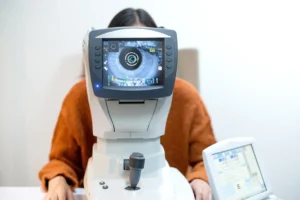
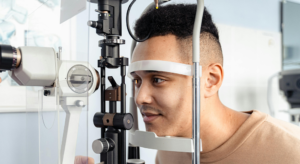
- Comprehensive eye examination
- Dilated fundus examination to assess the retina
- Low-light or dark adaptation tests, if indicated
- Refraction tests for myopia
- Assessment for possible lens clouding
- Review of medical history, diet, and medications
These help identify whether the symptom is related to the retina, lens, vitamin levels, or other health factors.
When Should You See an Eye Specialist for Night Blindness?
You should seek professional evaluation if:
- Symptoms are worsening over time
- You have difficulty driving or moving around safely at night
- You notice reduced peripheral vision
- You require unusually long time to adapt to dim light
- There is a sudden change in night vision
- You have existing eye conditions and symptoms are progressing
An early assessment can help identify the underlying issue and guide appropriate treatment or monitoring.
FAQs
1. Is night blindness the same as becoming blind?
No. Night blindness is a symptom, not a diagnosis. It does not mean complete vision loss, but it may signal an underlying condition that requires assessment.
2. Can night blindness be temporary?
Yes, certain causes such as vitamin A deficiency or medication effects may be reversible. Other causes may be long-term.
3. Can night blindness affect driving safety?
Difficulty seeing in low-light conditions may affect night driving. If you experience this, it is advisable to avoid driving in the dark until assessed.
4. Is night blindness always linked to retinal disease?
Not always. It may be related to the lens, refractive error, nutritional issues, or systemic health conditions.
5. Can children experience night blindness?
Yes. If a child frequently struggles in dim environments, bumps into objects, or avoids dark places, an eye check is recommended.
Ready for Clarity?
Schedule an Eye Assessment Today
If you find it difficult to see in the dark or notice changes in night vision, an evaluation can help identify the cause and guide the next steps.
You do not need to wait for symptoms to worsen early assessment supports timely management.
➡️ Book an appointment with our clinic to have your eyes checked.
➡️ Find out what may be causing your night-vision difficulties.