Wanting to stop relying on glasses is a good reason to consider LASIK, but it is not the same as being suitable for it. Whether LASIK is appropriate depends on the shape and thickness of your cornea, how stable your prescription is, the health of your eye surface and retina, and how you use your eyes day to day. This article focuses on how suitability is checked. If you are weighing up the procedure itself, including risks and recovery, read what you should know before deciding to have LASIK surgery.
Key takeaways
- LASIK eligibility depends on multiple factors, not just your desire to remove glasses.
- Stable vision, healthy eyes, and adequate corneal thickness are essential criteria.
- Certain conditions, like dry eyes or eye diseases, may affect suitability.
- A detailed eye assessment is the only reliable way to determine if LASIK is appropriate for you, and if it is not, other options may be.
What does “LASIK eligibility” really mean?
LASIK eligibility refers to whether your eyes meet specific medical criteria that allow safe and appropriate laser vision correction. Not everyone is suitable, and that is completely normal.
Doctors assess several aspects of your eye health and vision stability before recommending LASIK. Being unsuitable for LASIK does not necessarily mean you are unsuitable for any form of vision correction; it means the method needs to be matched to your eyes.
Who is generally suitable for LASIK treatment?
You may be considered suitable if you meet the following conditions:
- Age requirement: typically 18 years or older, with an eye prescription that has stabilised.
- Stable refraction: your refraction (spectacle prescription) should be stable.
- Healthy cornea: adequate thickness for reshaping and no signs of corneal disease.
- Common refractive errors: such as short-sightedness (myopia), long-sightedness (hyperopia) or astigmatism.
- Good overall eye health: no active infections or inflammation.
- Not pregnant or breastfeeding, generally in good health, and with realistic expectations of what laser correction can achieve.
Who may not be suitable for LASIK?
Some individuals may need alternative options instead of LASIK. These include people with:
- Thin or irregular corneas, including keratoconus or suspicious corneal scans, because LASIK removes corneal tissue and can weaken an already thin cornea.
- Severe dry eye or other eye-surface disease.
- Certain eye diseases that affect vision, such as glaucoma, cataract or retinal conditions, which may need separate care first.
- Unstable vision, where the prescription is still changing.
- Pregnancy, breastfeeding or hormonal changes, which can cause temporary changes in vision.
- Very high prescriptions, or not enough corneal tissue for the intended correction.
In such cases, your doctor may discuss other vision correction methods that are more appropriate. TransPRK is often considered for thinner corneas or where avoiding a flap is preferred, SMILE Pro 2.0 is a flap-free option for eligible myopia and astigmatism, and an implantable collamer lens (ICL) is often considered for higher prescriptions or corneas unsuited to laser, because no corneal tissue is removed.
What tests are done to assess LASIK eligibility?
A comprehensive eye examination is essential. At London Eye & Retina Specialist Centre, the LASIK, SMILE Pro 2.0 and TransPRK suitability evaluation costs $54.50 (inclusive of 9% GST) and includes:
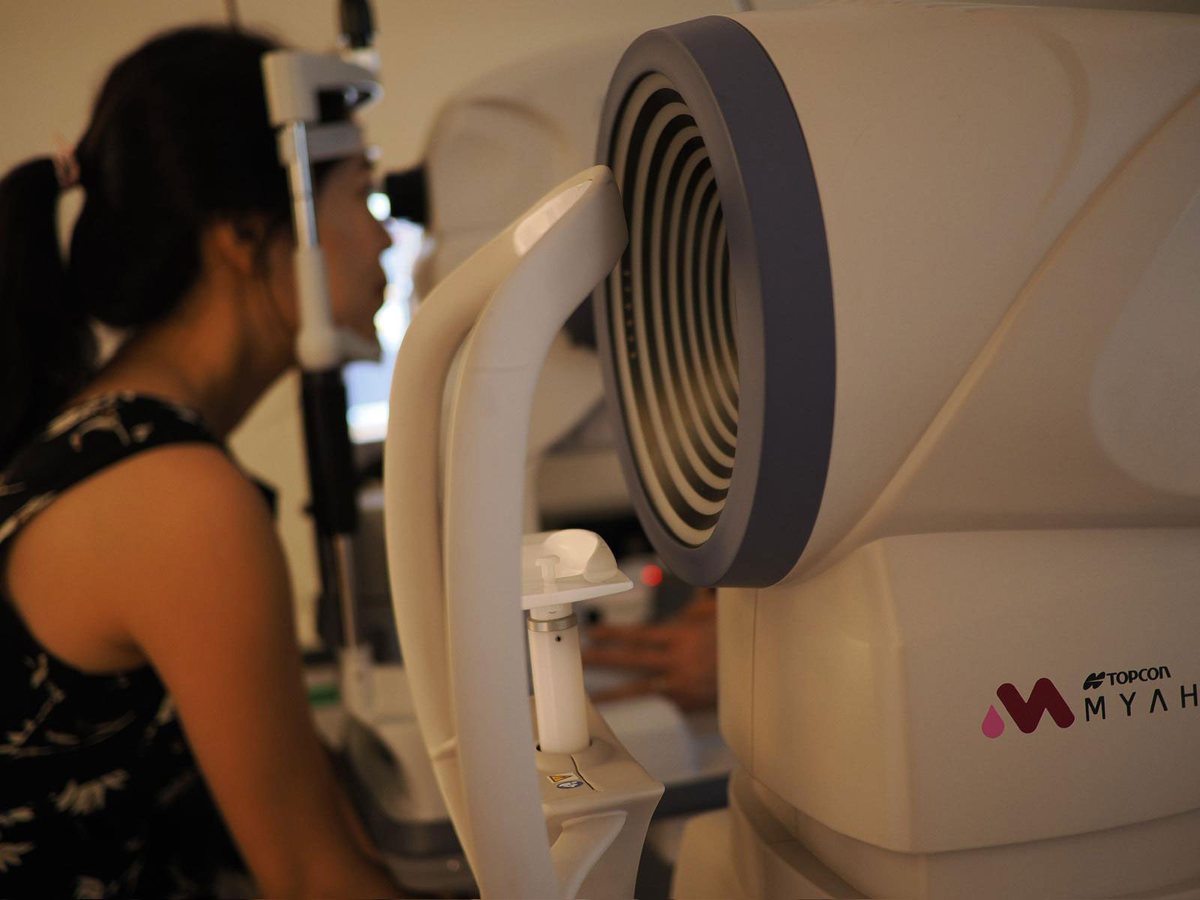
- Corneal mapping: corneal topography and EyeStar tomography, which map the shape of the cornea and help pick up irregularities such as keratoconus.
- Corneal thickness measurement (pachymetry): to check there is enough tissue for the intended correction.
- Refraction: a manifest refraction to measure your prescription, plus a dilated spectacle-degree check (cyclorefraction) to confirm it.
- Dry-eye and tear-film assessment: to check whether the eye surface is healthy enough for surgery.
- Pupil assessment and eye pressure: as part of the general eye health check.
- Dilated retinal examination: because laser vision correction changes how the eye focuses but does not remove the retinal risks that come with short-sightedness, especially moderate to high myopia.
These tests help ensure that decisions are based on accurate clinical findings rather than assumptions. Assessment and surgery are on separate days, so your pupils return to normal after dilation and you have time to decide.
Can lifestyle or habits affect your eligibility?
Yes, certain lifestyle factors can influence LASIK eligibility:
- Frequent screen use may worsen dry eyes.
- Contact lens use may require a break before assessment, since lenses can temporarily alter the shape of the cornea.
- Occupations or sports with a risk of eye trauma may need special consideration, and a flap-free option may be discussed.
Discussing your daily routine with your doctor helps provide a clearer picture of suitability.
When to See an Eye Specialist
Consider booking a laser suitability evaluation if you are 18 or over, your glasses prescription has been stable, and you would like to rely less on glasses or contact lenses. See an eye specialist sooner if your prescription keeps changing, your vision is distorted in a way glasses do not correct, or you have a family history of keratoconus. If you have a sudden drop in vision, eye pain or new flashes and floaters, seek urgent care: call +65 6908 7533 (24-hour emergency eye care is available).
Read more: LASIK, vision correction options, SMILE Pro 2.0, TransPRK, ICL and fees & packages.
Frequently asked questions
Can I undergo LASIK if I have dry eyes?
Mild dry eyes may still be manageable, but moderate to severe cases may require treatment before considering LASIK.
Is LASIK eligibility permanent?
No, eligibility can change over time depending on your eye health and vision stability.
How long does the eligibility assessment take?
The assessment usually takes about 2 to 2.5 hours, because it involves several scans, a refraction and pupil dilation. Assessment and surgery take place on separate days.
Can I choose LASIK even if I’m not eligible?
No, suitability is based on medical assessment. Your doctor will recommend appropriate alternatives if LASIK is not suitable.
More questions patients ask
How much does a LASIK suitability evaluation cost in Singapore? A LASIK suitability evaluation costs $54.50 at London Eye & Retina Specialist Centre in Novena, inclusive of 9% GST, and the same evaluation covers SMILE Pro 2.0 and TransPRK. If ICL turns out to suit you better, the ICL evaluation is $174.40, or a $110 + GST top-up when switching from a laser evaluation. Fees may vary, so please confirm with the clinic.
What happens if I am not suitable for LASIK? Not being suitable for LASIK often still leaves other options. TransPRK is often considered for thinner corneas or where avoiding a flap is preferred, SMILE Pro 2.0 is flap-free for eligible myopia and astigmatism, and an implantable collamer lens (ICL) is often considered for higher prescriptions or corneas unsuited to laser. Well-fitted glasses and contact lenses remain valid choices too.
Can I have LASIK if I have keratoconus? LASIK is generally not suitable for keratoconus, because it removes corneal tissue and can worsen a cornea that is already thin and weakened. This is why corneal topography, EyeStar tomography and pachymetry are part of every laser suitability evaluation. If keratoconus is found, corneal cross-linking may be considered to help stabilise the cornea instead.
Why does a LASIK suitability check include a retinal examination? A LASIK suitability check includes a dilated retinal examination because laser vision correction changes how the eye focuses but does not remove the retinal risks that come with short-sightedness, especially moderate to high myopia. Dr James Ng is also a fellowship-trained vitreoretinal surgeon, so the retina is checked as carefully as the cornea before any laser treatment is recommended.
Can I have LASIK if I am over 40? Being over 40 does not by itself rule out LASIK, but LASIK does not prevent presbyopia, the age-related loss of near focus that typically starts in your 40s, so reading glasses may still be needed. For people already affected, monovision laser correction sets one eye for distance and the other for near, at $2,888 for one eye. A suitability evaluation helps decide whether this suits you.
Thinking about LASIK in Singapore?
Understanding your LASIK eligibility is the first step towards clearer vision. If you are considering LASIK, a proper consultation can help you make an informed decision based on your individual eye condition.
At London Eye & Retina Specialist Centre, Dr James Ng and his team provide thorough eye assessments to determine whether LASIK, or another form of vision correction, is suitable for you. You are welcome to book a consultation at our Novena clinic to understand your options and take the next step towards clearer vision.