Overview
Retinoblastoma begins in the retina, the light-sensitive layer at the back of the eye. It is the most common eye cancer in children, though it remains rare overall, and it usually appears in babies and children under five. It can affect one eye or, less often, both.
For parents, the most important thing to know is that retinoblastoma is often first noticed at home: frequently through an unusual white reflection in a child’s pupil seen in photographs. When detected and treated early, the outlook for a child’s life and, in many cases, their vision is very good. Because a growing tumour can spread beyond the eye if left untreated, any suspicion should be acted on urgently. This is not something to watch and wait on.
Symptoms
The signs can be subtle, and a young child cannot describe them, so parents’ observations are vital. Watch for:
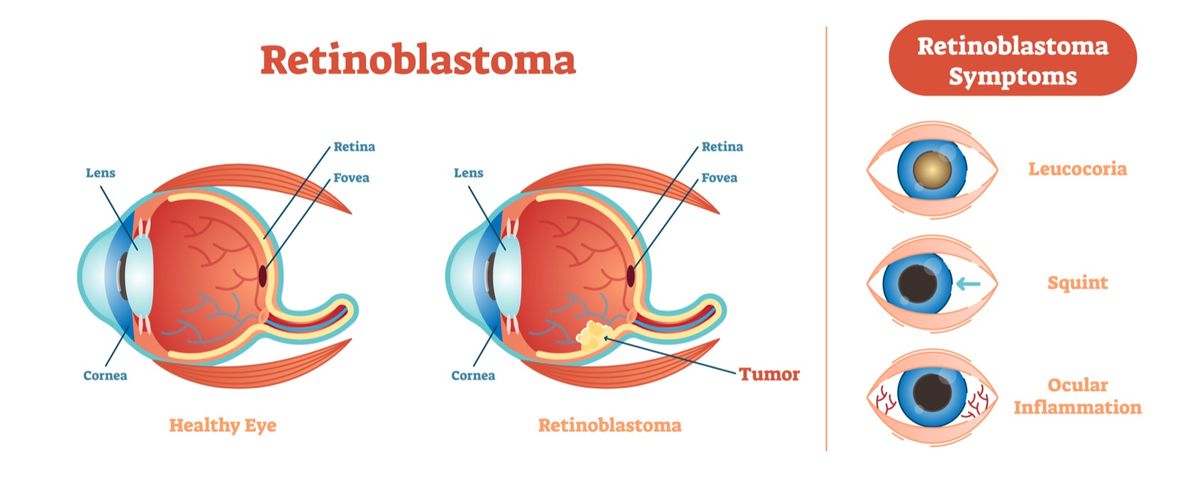
- A white or “cat’s-eye” glow in the pupil: especially noticeable in photos taken with a flash, where one pupil looks white instead of the usual red (this is called leukocoria)
- A squint (turned or crossed eye): one eye not looking in the same direction as the other
- A red, sore or swollen eye without an obvious infection
- A change in the colour of the iris (the coloured ring)
- Poor vision, or an eye that does not seem to follow objects or faces
- Sometimes an eye that appears larger or bulging
Causes
Retinoblastoma is caused by a change (mutation) in a gene that normally controls how retinal cells grow. When this control is lost, the cells multiply uncontrollably and form a tumour. There are two main forms:
- Heritable (genetic) retinoblastoma: the gene change can be inherited or occur very early in development; it often affects both eyes and can run in families
- Non-heritable retinoblastoma: the gene change happens by chance in one eye only, and is not passed on
Nothing a parent did or did not do causes retinoblastoma, it is not linked to anything during pregnancy or in the child’s care.
Risk factors
- A family history of retinoblastoma
- Inheriting the altered gene from a parent
- Very young age (most cases occur under five years)
Children with a known family history should be checked from birth, as advised by a specialist.
Complications
If not treated, retinoblastoma can grow and spread beyond the eye, to the surrounding tissues, the optic nerve, the brain and other parts of the body, which becomes far more difficult to treat. Even with successful treatment, some children lose vision in the affected eye or need the eye removed to save their life. Children with the heritable form also carry a higher lifelong risk of other cancers and need long-term follow-up.
Diagnosis
If retinoblastoma is suspected, a specialist will arrange prompt assessment, which may include:
- A detailed retinal examination: usually under anaesthetic for young children, so the whole retina can be viewed
- Ultrasound and imaging of the eye: to measure and characterise the tumour
- MRI scanning: to check whether it has spread beyond the eye
- Genetic testing: to identify heritable disease and guide screening of the child and family
Treatment
Treatment is highly specialised and delivered by a dedicated team. The choice depends on the size, position and number of tumours, and whether one or both eyes are affected. The goals are, in order, to save the child’s life, then the eye, then vision. Options include:
- Chemotherapy: to shrink tumours, sometimes delivered directly to the eye’s blood supply
- Focal treatments: laser therapy or freezing (cryotherapy) for smaller tumours
- Radiotherapy: including targeted plaque treatment in selected cases
- Surgery to remove the eye (enucleation): for advanced tumours, to prevent spread; an artificial eye can be fitted afterwards
Care is coordinated with paediatric cancer specialists, and long-term follow-up is essential.
When to see a doctor
Arrange an urgent eye assessment if you notice a white glow in your child’s pupil (especially in photos), a new squint, or any change in the appearance or function of an eye. Do not wait, bring it to a doctor’s attention straight away. If you have a family history of retinoblastoma, tell your child’s doctor early so screening can begin from birth.
Prevention
Retinoblastoma cannot be prevented, but its harm can be greatly reduced through early detection. Families affected by the heritable form can have genetic counselling and testing, and at-risk babies can be screened from birth. For all parents, being alert to a white pupil in photographs and acting quickly on any concern is the single most valuable step.
White Pupil in a Photo? What to Do Now
If one of your child's pupils looks white, yellowish or unusually bright in a flash photo, or you notice a new squint, arrange an eye examination within days, not weeks. Do not wait to take more photos or for other symptoms to appear.
A white pupil reflex (leukocoria) has several possible causes, including congenital cataract, other retinal conditions and simple reflections in photos, but only a dilated eye examination can tell them apart, and retinoblastoma must be ruled out quickly. A new turned eye should also be checked; see strabismus (squint).
To arrange an urgent examination, call +65 6908 7533. 24-hour emergency eye care is available.
How We Can Help: Urgent Examination & Referral
Dr James Ng can examine your child's eyes, including a dilated examination of the retina, to look for signs that need further investigation. If retinoblastoma is suspected, we arrange urgent referral to a specialist paediatric eye cancer (ocular oncology) team, who confirm the diagnosis and plan treatment together with paediatric cancer specialists.
Retinoblastoma treatment is delivered in specialist paediatric cancer centres; London Eye & Retina does not provide cancer treatment. Our role is prompt examination, clear explanation and fast referral.
The Retinoblastoma Gene (RB1) and Family Screening
Retinoblastoma is linked to changes in the RB1 gene, which normally helps control how retinal cells grow. In the heritable form, a child carries the gene change in every cell, which is why both eyes are often affected and why other family members may be at risk.
- Genetic testing of the child, and sometimes the parents, helps show whether the form is heritable
- Brothers, sisters and future children of an affected child may need regular eye examinations from birth, as advised by the specialist team
- Adults who had retinoblastoma as children should tell their own doctors, as screening of their children is usually recommended
Frequently asked questions
What does a white pupil in photos mean? A white or yellowish glow in one pupil (instead of the normal red-eye) can be an early sign of retinoblastoma and should be checked urgently. It does not always mean cancer, but it must never be ignored.
Is retinoblastoma curable? When found and treated early, the outlook for a child’s life is very good. Early treatment also gives a better chance of saving the eye and preserving some vision.
Will my child lose the eye? Not always. Many eyes can be saved with chemotherapy and focal treatments, particularly when the tumour is caught early. Removing the eye is reserved for advanced cases to protect the child’s life.
Can it be passed to other children? The heritable form can run in families. Genetic testing and counselling can clarify the risk and guide screening of siblings and future children.
More questions patients ask
Should I worry if my child’s pupil looks white in just one photo? A white, yellowish or unusually bright pupil in even one flash photo should be checked by an eye specialist within days, not weeks. Parents should not wait to take more photos or for other symptoms to appear. A white pupil reflex can have several causes, including congenital cataract, other retinal conditions and simple reflections, but only a dilated eye examination can tell them apart and rule out retinoblastoma quickly.
What age do children usually get retinoblastoma? Retinoblastoma usually appears in babies and children under five years old, and very young age is itself a risk factor. Because a young child cannot describe changes in their sight, retinoblastoma is often first noticed at home by parents, frequently as a white reflection in the pupil in photographs. Babies with a family history of retinoblastoma should be checked from birth, as advised by a specialist.
Can retinoblastoma affect both eyes? Yes, retinoblastoma can affect one eye or, less often, both eyes. Both eyes are more often affected in the heritable (genetic) form, where the child carries a change in the RB1 gene in every cell. Non-heritable retinoblastoma arises by chance in one eye only and is not passed on. Genetic testing helps show which form a child has and guides screening of the family.
Does my child need anaesthetic to be examined for retinoblastoma? A detailed retinal examination for suspected retinoblastoma is usually done under anaesthetic for young children, so the whole retina can be viewed. This forms part of a prompt specialist assessment that may also include ultrasound and imaging of the eye, MRI scanning to check whether the tumour has spread beyond the eye, and genetic testing to identify heritable disease.
Where is retinoblastoma treated in Singapore? Retinoblastoma is treated in specialist paediatric cancer centres by a paediatric eye cancer (ocular oncology) team working with paediatric cancer specialists. London Eye & Retina Specialist Centre in Novena does not provide cancer treatment; its role is prompt examination, clear explanation and fast referral. Dr James Ng can examine a child’s eyes, including a dilated examination of the retina, and arrange urgent referral if retinoblastoma is suspected.
Does a child need long-term follow-up after retinoblastoma? Yes, long-term follow-up is essential after retinoblastoma treatment, and care is coordinated with paediatric cancer specialists. Children with the heritable form carry a higher lifelong risk of other cancers and need ongoing monitoring. Adults who had retinoblastoma as children should tell their own doctors, as eye screening of their children is usually recommended.
Key takeaways
- Retinoblastoma is a rare childhood eye cancer, usually in children under five.
- The commonest early sign is a white glow in the pupil (leukocoria), often first seen in flash photos.
- A new squint or change in an eye’s appearance also warrants urgent assessment.
- It is highly treatable when caught early, do not wait to seek help.
- Families with a history should seek genetic counselling and early screening from birth.